


🤝
Contracts • Defenses to Enforcement and Formation
K#059
Legal Definition
Where the seller actually conveys to the purchaser, the seller can enforce the purchaser's promise to pay. In contrast, the purchaser can specifically enforce a land contract where at least 2 of these requirements are met: (1) valuable improvements to the property, (2) payment (in whole or in part), and/or (3) possession.
Plain English Explanation
There are two important things happening in this answer. One involves a seller forcing the buyer the acknowledge the agreement to buy the property, the other involves a buyer forcing the seller to acknowledge the agreement to sell the property. Let's look at them individually:
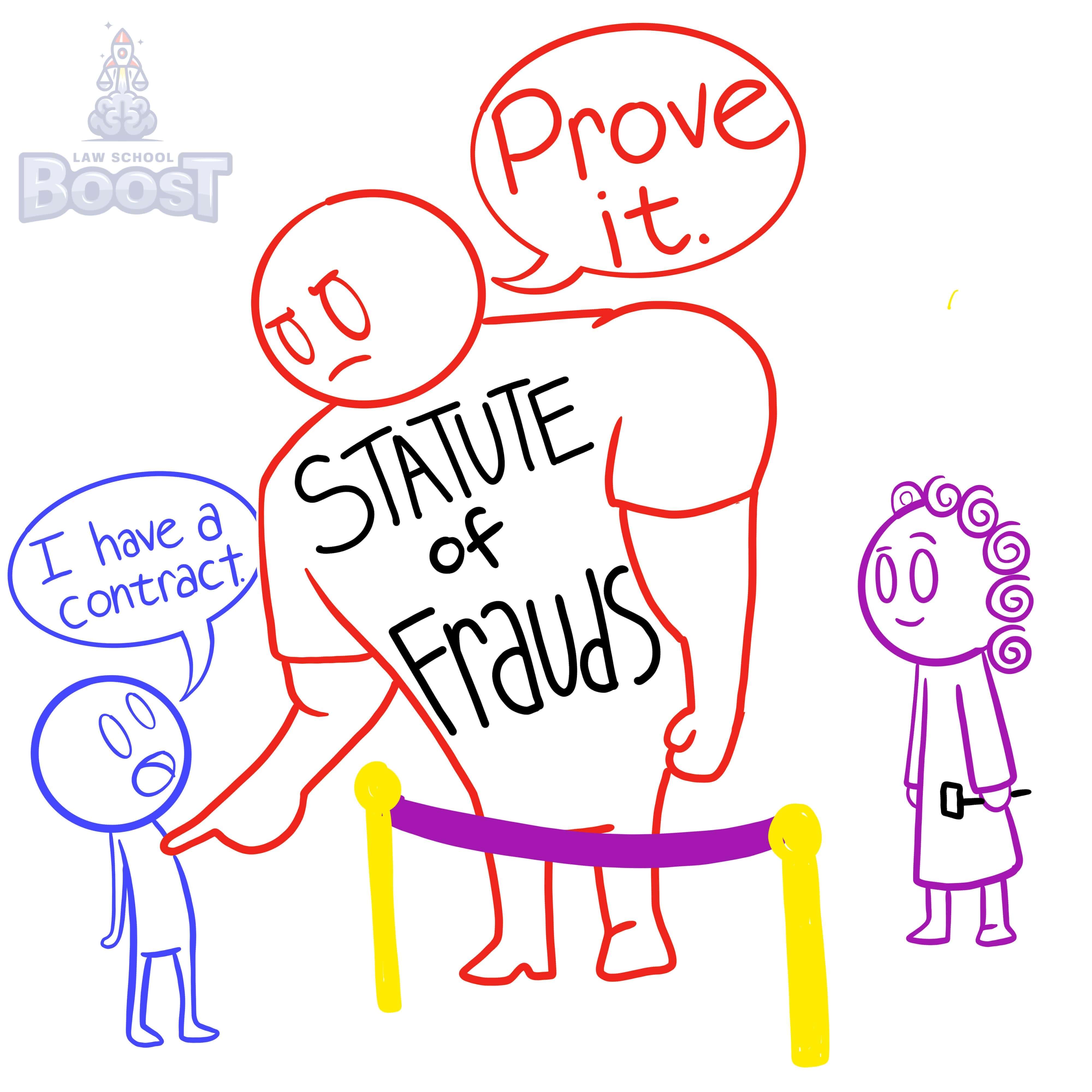
First, imagine that Bob offers to sell Sam his land for $100,000 and Sam accepts. They now have an oral agreement. This oral agreement does not satisfy the Statute of Frauds. However, imagine that Bob conveys (meaning that he legally gives) the land to Sam. This performance is enough to satisfy the Statute of Frauds and allow Bob to ask a court for help. Why? Well, look at it from the court's perspective. People are generally predictable, and usually act reasonably prudent. It is not normal for people to randomly convey land to other people without there being some sort of agreement in place. So the fact that Bob conveyed the land to Sam is enough proof to suggest that some sort of agreement likely existed between them, even if Sam won't admit it.
Second, let's look at this from the other side. Imagine that Bob offers to sell Sam his land for $100,000 and Sam accepts. Bob knows Sam needs to get his money together, and gives Sam a month to pay. During that time, Sam starts fixing up the land. Sam plants a dozen trees, and begins building a home. A few weeks later, Bob sees how beautiful the land is and decides he wants to keep it. Sam wants a court to force Bob to follow the oral agreement and sell him the land. Bob will argue that it does not satisfy the Statute of Frauds because there is no signed, written contract. However, Sam will argue that not only does he currently possess the land, but he has made valuable improvements to the property. Why would he do that unless he believed the property would become his? Why spend the money and the effort? It doesn't make sense. Because of that, the court will allow the case to proceed based on Sam's performance, which satisfies the Statute of Frauds.
First, imagine that Bob offers to sell Sam his land for $100,000 and Sam accepts. They now have an oral agreement. This oral agreement does not satisfy the Statute of Frauds. However, imagine that Bob conveys (meaning that he legally gives) the land to Sam. This performance is enough to satisfy the Statute of Frauds and allow Bob to ask a court for help. Why? Well, look at it from the court's perspective. People are generally predictable, and usually act reasonably prudent. It is not normal for people to randomly convey land to other people without there being some sort of agreement in place. So the fact that Bob conveyed the land to Sam is enough proof to suggest that some sort of agreement likely existed between them, even if Sam won't admit it.
Second, let's look at this from the other side. Imagine that Bob offers to sell Sam his land for $100,000 and Sam accepts. Bob knows Sam needs to get his money together, and gives Sam a month to pay. During that time, Sam starts fixing up the land. Sam plants a dozen trees, and begins building a home. A few weeks later, Bob sees how beautiful the land is and decides he wants to keep it. Sam wants a court to force Bob to follow the oral agreement and sell him the land. Bob will argue that it does not satisfy the Statute of Frauds because there is no signed, written contract. However, Sam will argue that not only does he currently possess the land, but he has made valuable improvements to the property. Why would he do that unless he believed the property would become his? Why spend the money and the effort? It doesn't make sense. Because of that, the court will allow the case to proceed based on Sam's performance, which satisfies the Statute of Frauds.
Visual Aids