


🤝
Contracts • Formation Requirements
K#031
Legal Definition
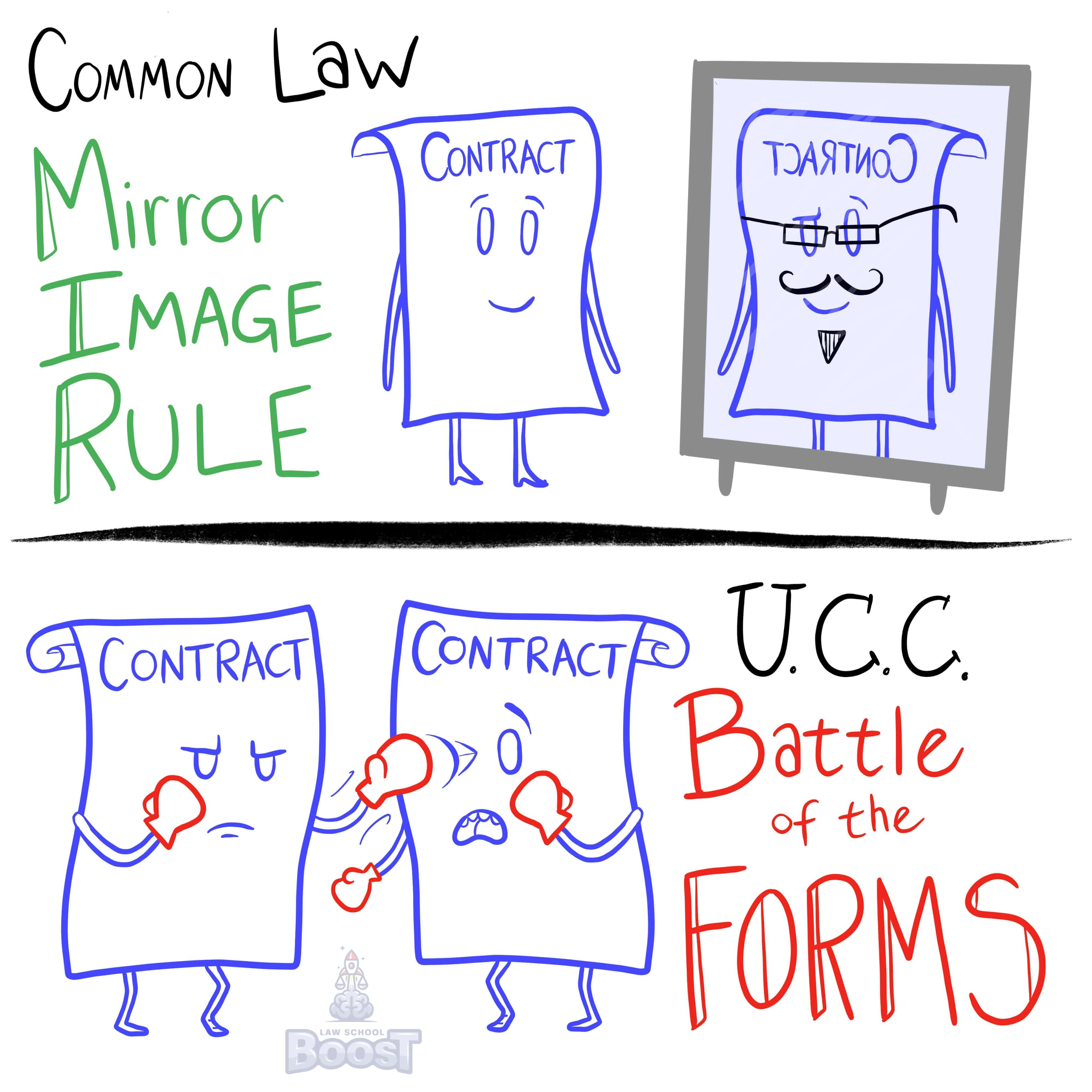
Additional terms become part of the contract unless they: (1) materially alter its original terms; or (2) the offeror has objected or objects within a reasonable time after notice; or (3) the offer expressly limits acceptance to the terms of the offer.
Plain English Explanation
The first thing you'll notice about this answer is that it specifically applies to circumstances where both parties are merchants. This is important, because UCC has special rules for merchants vs. non-merchants, because it is generally less protective of merchants (since they are seen as being professionals who should know what they are doing, vs. non-merchants who are just everyday normal citizens trying to buy stuff they want).
In a scenario where both parties are merchants, additional terms will generally become part of the contract unless they fall into one of three exceptions:
The first exception is if the new terms materially alter the original terms of the contract. When things matter, they are material, so a material alteration is an alteration that matters, or is important enough to change the bargain. For example, if Bob offers to sell Sam a crate of widgets delivered to Sam's business, if Sam specifies that they must be delivered to the back door of the business, it's not really that big of a deal. Yes, it is a new term, and yes, it may take extra effort compared to delivering them to the front door, but it is unlikely to be considered material. As a result, Sam's terms will become part of the contract (unless one of the other exceptions apply). However, imagine if, instead, Sam specified that they must be delivered to his warehouse, located on the top of a mountain, accessible only by helicopter. That would be a pretty big change -- a material change, which means it would not become part of the contract.
The second exception is when the person making the offer has either objected to the proposed term at some point, or objects to it within a "reasonable time" after they have notice of the term. In other words, if Sam knows that Bob will not deliver to back doors of companies, then his proposal will not be added. Even though it isn't very material, Bob has objected to it in the past and it's not fair to assume he's okay with it now. Similarly, if Bob see's Sam's term of "deliver to my backdoor," he is able to object to it and cancel it out as long as he doesn't wait too long. How long is too long? That's for you to argue on the exam.
The third exception is when the offer itself expressly limits acceptances to the terms of the offer. In other words, where the offer very clearly states that no alterations are allowed, then they are not.
In a scenario where both parties are merchants, additional terms will generally become part of the contract unless they fall into one of three exceptions:
The first exception is if the new terms materially alter the original terms of the contract. When things matter, they are material, so a material alteration is an alteration that matters, or is important enough to change the bargain. For example, if Bob offers to sell Sam a crate of widgets delivered to Sam's business, if Sam specifies that they must be delivered to the back door of the business, it's not really that big of a deal. Yes, it is a new term, and yes, it may take extra effort compared to delivering them to the front door, but it is unlikely to be considered material. As a result, Sam's terms will become part of the contract (unless one of the other exceptions apply). However, imagine if, instead, Sam specified that they must be delivered to his warehouse, located on the top of a mountain, accessible only by helicopter. That would be a pretty big change -- a material change, which means it would not become part of the contract.
The second exception is when the person making the offer has either objected to the proposed term at some point, or objects to it within a "reasonable time" after they have notice of the term. In other words, if Sam knows that Bob will not deliver to back doors of companies, then his proposal will not be added. Even though it isn't very material, Bob has objected to it in the past and it's not fair to assume he's okay with it now. Similarly, if Bob see's Sam's term of "deliver to my backdoor," he is able to object to it and cancel it out as long as he doesn't wait too long. How long is too long? That's for you to argue on the exam.
The third exception is when the offer itself expressly limits acceptances to the terms of the offer. In other words, where the offer very clearly states that no alterations are allowed, then they are not.
Hypothetical
See Simple English Tab
Visual Aids