


🤝
Contracts • Formation Requirements
K#046
Legal Definition
Generally, a legally binding contract cannot be formed without consideration. However, a promise is legally enforceable despite a lack of consideration if there is a consideration substitute, such as: (1) a written promise to satisfy an obligation for which there is a legal defense; or (2) promissory estoppel (detrimental reliance).
Plain English Explanation
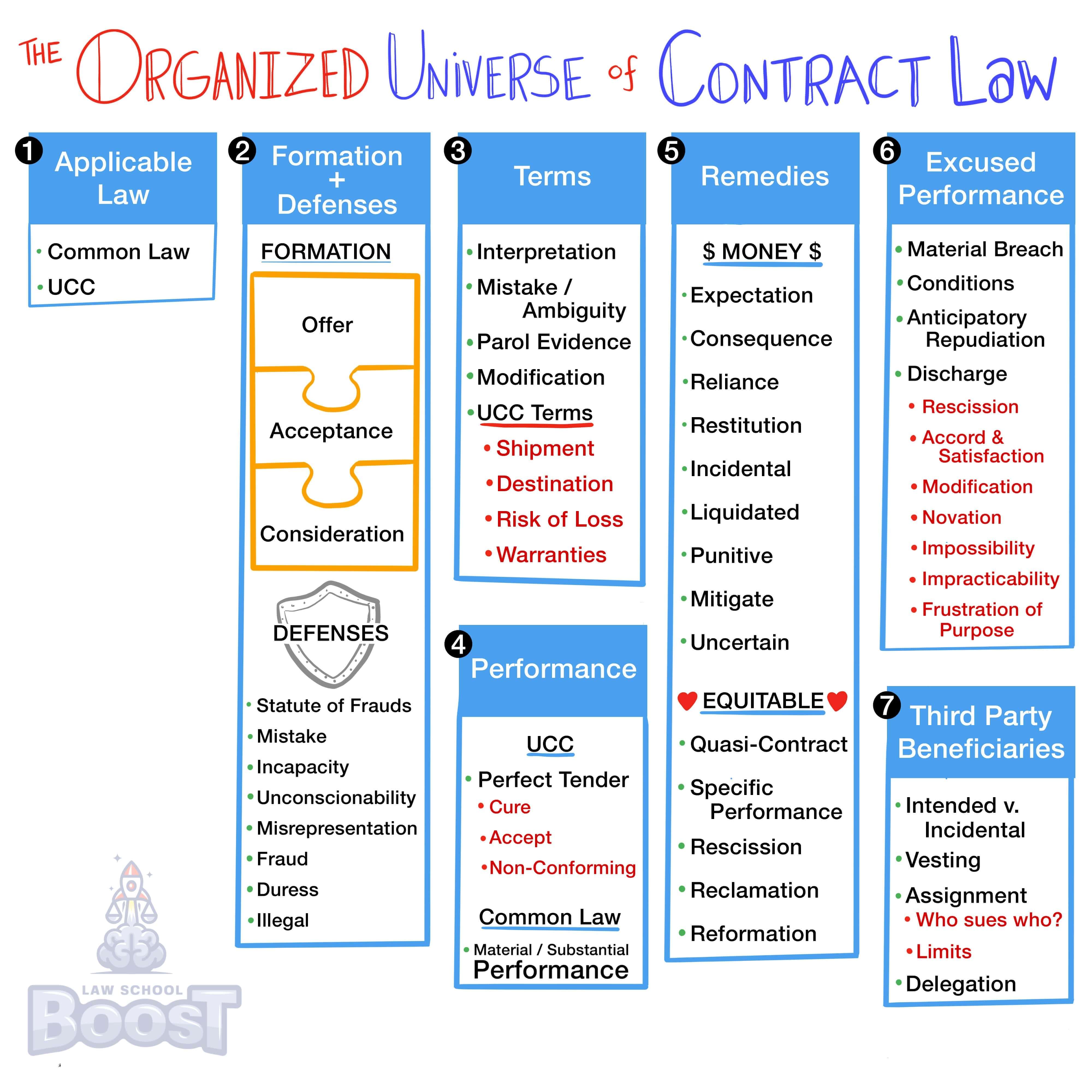
In law school and on the Bar Exam, contract law is largely about identifying the required and essential parts of a contract so that you can argue whether a contract exists or not (and whether or not one or both of the parties are obligated to perform). This is why it is so important to be able to spot an offer, an acceptance, and consideration. On exams, it is common to encounter fact patterns where it appears as if one of the factors doesn't exist -- when, in fact, it does, you just need to be creative in arguing why it is present. Consideration substitutes are an example of such a scenario, where it may appear that no consideration is present, and thus no contract exists; however, a consideration substitute is present, which would satisfy the requirement.
One common substitute is a written promise to satisfy an obligation for which there is a legal defense. For example, where Bob owes Sam $1,000, and a legal action to collect the debt is barred by the Statute of Limitations, Bob may write Sam to say, "I know I owe you $1,000, but I will pay you $600." There is no new consideration, but Sam can enforce the promise to pay $600.
Another common example is promissory estoppel, which will be covered in other cards.
One common substitute is a written promise to satisfy an obligation for which there is a legal defense. For example, where Bob owes Sam $1,000, and a legal action to collect the debt is barred by the Statute of Limitations, Bob may write Sam to say, "I know I owe you $1,000, but I will pay you $600." There is no new consideration, but Sam can enforce the promise to pay $600.
Another common example is promissory estoppel, which will be covered in other cards.
Hypothetical
Hypo 1: Bob owes Sam $1,000. However, the statute of limitations has run, which means Sam is no longer able to pursue the debt in court. One day, Bob writes to Sam, "I know I owe you $1,000, but I will pay you $600 instead." Result: There is no new consideration offered here, since money was already owed. However, this can count as a consideration substitute which would allow Sam to enforce the new promise to pay $600, which would be enforceable through a lawsuit.
Visual Aids