


🤝
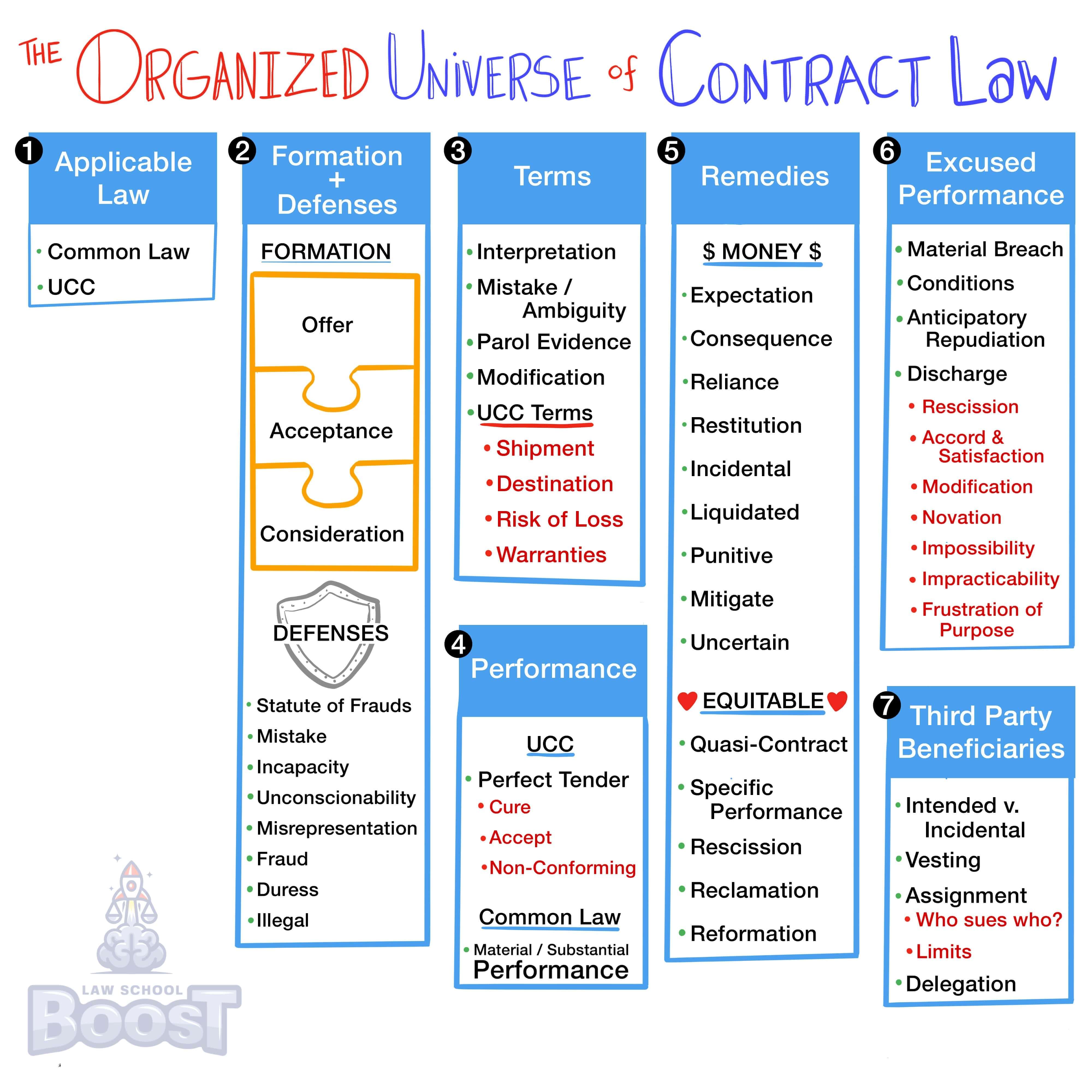
Contracts • Formation Requirements
K#017
Legal Definition
Generally, offers create a power of acceptance within the person to whom the offer was made. If an offer is terminated, it can no longer be accepted. There are 4 methods of termination: (1) lapse of time; (2) death of the party prior to acceptance; (3) words or conduct of the offeror; and (4) words or conduct of the offeree.
Plain English Explanation
Offers can only be accepted by the person who the offer was made to, and only if the offer is still valid. If an offer is terminated, then there is no longer any power to accept the offer. In other words, it is possible for someone making an offer to squish it before someone has the ability to accept it and transform it into a valid contract.
There are 4 ways to terminate and squish an offer: (1) some offers either specify when they will terminate ("you must accept this within 3 business days") and others will terminate as a result of regulation limiting how long certain offers can remain open; (2) if the person making or receiving the offer dies before the offeree accepts, then the offer dies too; (3) if the offeror says or does something that should reasonably be interpreted as being a termination of the offer, then the offer could arguably have been terminated (and you will need to argue this on an exam); (4) likewise, if the offeree says or does something that should reasonably be interpreted as being a rejection of the offer, then the offer dies.
There are 4 ways to terminate and squish an offer: (1) some offers either specify when they will terminate ("you must accept this within 3 business days") and others will terminate as a result of regulation limiting how long certain offers can remain open; (2) if the person making or receiving the offer dies before the offeree accepts, then the offer dies too; (3) if the offeror says or does something that should reasonably be interpreted as being a termination of the offer, then the offer could arguably have been terminated (and you will need to argue this on an exam); (4) likewise, if the offeree says or does something that should reasonably be interpreted as being a rejection of the offer, then the offer dies.
Hypothetical
Hypo 1: Bob is outside standing next to his car. Sam walks by and says, "Gee, I really like your car." Bob says, "I'll sell it to you for $500." Amy overhears this offer and runs up to Bob and says, "Sold!" and tries to shove the money into his pocket. Result: Amy has no power of acceptance because she was not the recipient of the offer. Only Sam may accept Bob's offer. This being said, if Bob wants to accept Amy's offer, he is free to do so because his immediate acceptance of Amy's offer will be sufficient to signal to Sam that his offer has been terminated (after all, how can Sam expect Bob's offer to still be good when he just saw him sell it to Amy).
Visual Aids