


🔍
Federal Evidence • Character Evidence
EVID#074
Legal Definition
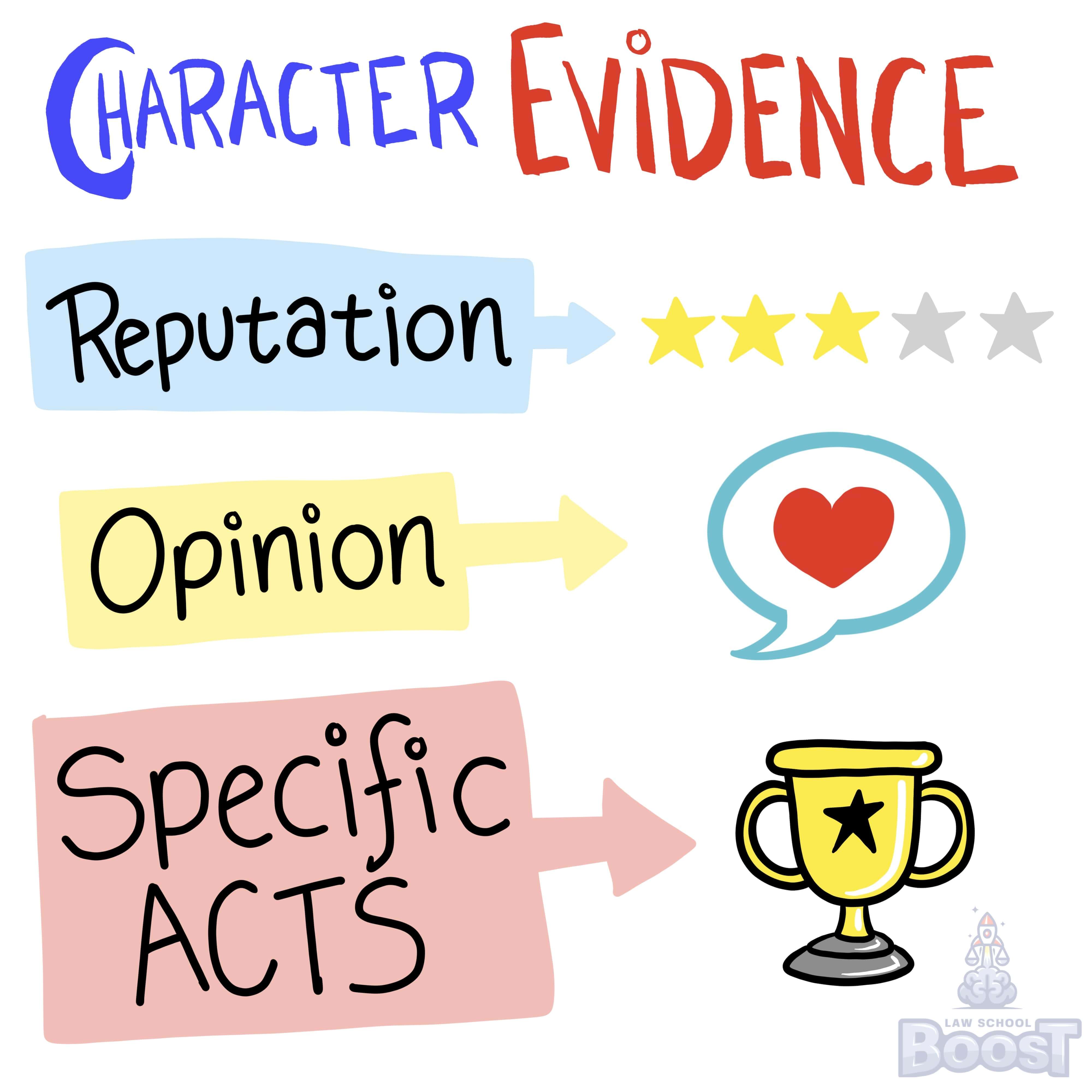
Generally, character evidence is first offered by the defendant in the form of reputation or opinion evidence; specific act evidence is not allowed unless it is a sexual assault or misconduct case. On cross-examination, a party may offer reputation, opinion, or specific acts evidence to impeach the witness' credibility.
Plain English Explanation
Under the Federal rules, usually, the defendant in a court case is the first to bring up character evidence. They do this through sharing opinions or reputation information about someone, but not through telling about specific actions, except in cases involving sexual assault or misconduct. During cross-examination, both parties have the opportunity to question the credibility of a witness by discussing their reputation, sharing opinions about them, or even citing specific actions they've taken.
Hypothetical
Hypo 1: In a theft case, Bob is the defendant. His lawyer wants to show that Bob is not likely to steal, so he calls a witness who says, "Bob has a good reputation for being honest." Result: This is allowed under the rule. The lawyer used Bob's general reputation for honesty to suggest he wouldn't steal.
Hypo 2: In the same case, during cross-examination, the prosecutor asks the witness, "Are you aware of a time Bob was caught shoplifting?" Result: This is allowed. The prosecutor is using a specific past action of Bob to challenge the witness's claim about his honesty.
Hypo 3: In a different case, Bob is accused of assault. He decides to show he's non-violent by having his friend Sam testify, "Bob is known for being peaceful." Result: This is allowed. Bob's lawyer is using Sam to discuss Bob's reputation as having a peaceful nature to defend him.
Hypo 4: During the cross-examination in the assault case, the prosecutor asks Sam, "Isn't it true that Bob was involved in a bar fight last year?" Result: This is allowed. The prosecutor uses a specific act from Bob's past to question the claim of him being non-violent.
Hypo 2: In the same case, during cross-examination, the prosecutor asks the witness, "Are you aware of a time Bob was caught shoplifting?" Result: This is allowed. The prosecutor is using a specific past action of Bob to challenge the witness's claim about his honesty.
Hypo 3: In a different case, Bob is accused of assault. He decides to show he's non-violent by having his friend Sam testify, "Bob is known for being peaceful." Result: This is allowed. Bob's lawyer is using Sam to discuss Bob's reputation as having a peaceful nature to defend him.
Hypo 4: During the cross-examination in the assault case, the prosecutor asks Sam, "Isn't it true that Bob was involved in a bar fight last year?" Result: This is allowed. The prosecutor uses a specific act from Bob's past to question the claim of him being non-violent.
Visual Aids