


🏠
Real Property • Easements
PROP#101
Legal Definition
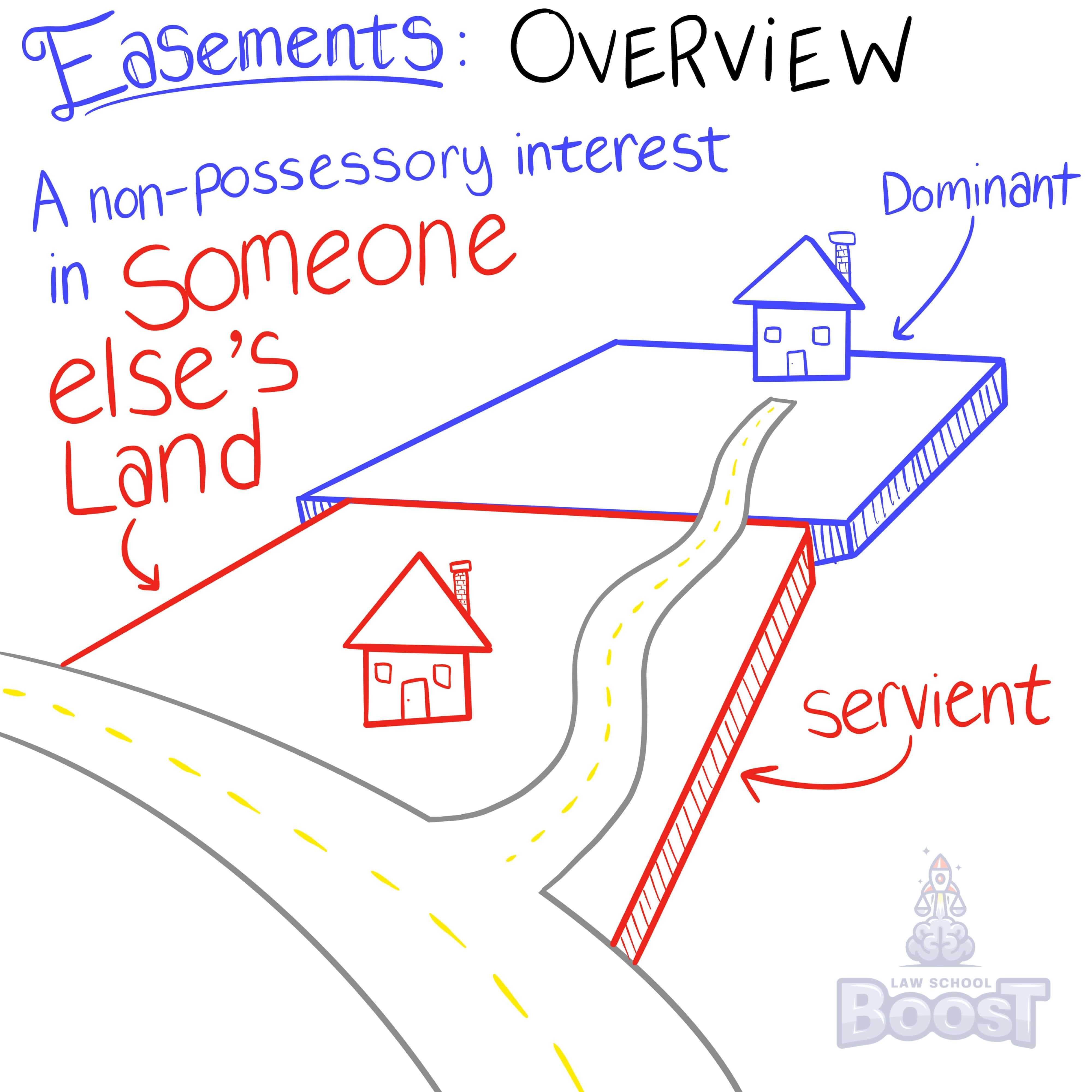
An easement appurtenant allows its holder physical use or enjoyment of another's land, and requires two parcels of land: the dominant tenement (the benefited estate) and the servient tenement (the burdened estate). It attaches to the land and always passes with the benefited land. It does not pass with the burdened land where the new owner is a bona fide purchaser without notice of the easement.
Plain English Explanation
Easement appurtenant applies when you have two different parcels of land that touch each other and one of the parcels provides a benefit to the other. The parcel that receives the benefit is called the dominant parcel and the parcel that serves the dominant parcel is called the servient parcel.
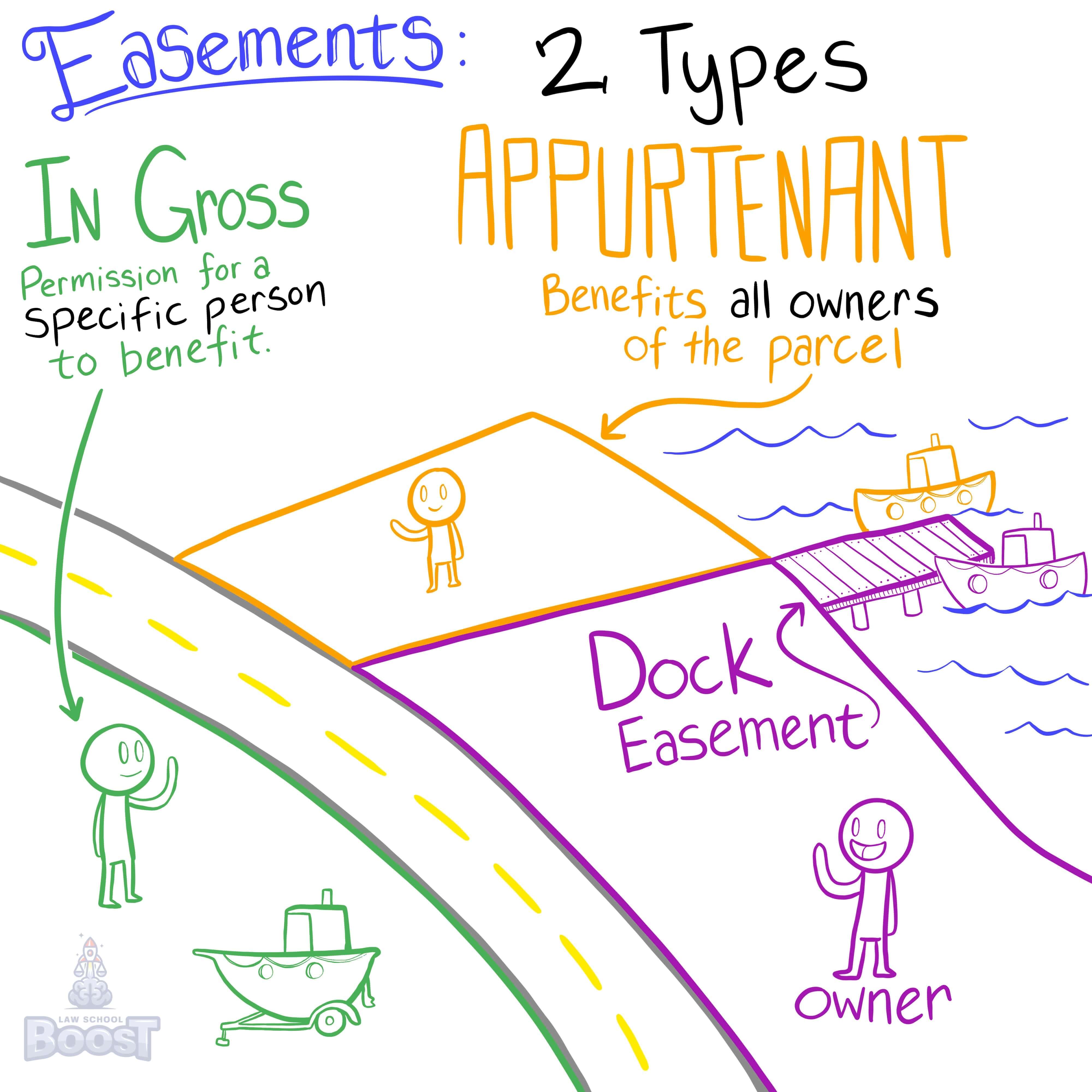
Imagine if Amy and Bob both owned parcels of land next to each other, next to a lake. Amy's parcel has a bunch of rocks on its shore making it difficult to build a dock for her boat. Bob already has a dock. Being a good neighbor, Bob gives Amy an easement that allows her to use his dock. In other words, Amy has the right to travel onto Bob's property and use his dock for her boat.
This is an example of an easement appurtenant. Amy's parcel of land benefits now because it is possible to make better use of the lake. Amy's parcel is the dominant parcel because it benefits from the easement, and Bob's parcel is the servient parcel because it is burdened by having to allow Amy access on to Bob's private property to use his dock.
Generally, this type of easement passes with the land, which means when Bob sells his parcel to Dan, Dan will also have to allow Amy to use the dock. The only exception to this is if Dan purchases the land without notice of the easement (we will discuss notice requirements in other cards).
Imagine if Amy and Bob both owned parcels of land next to each other, next to a lake. Amy's parcel has a bunch of rocks on its shore making it difficult to build a dock for her boat. Bob already has a dock. Being a good neighbor, Bob gives Amy an easement that allows her to use his dock. In other words, Amy has the right to travel onto Bob's property and use his dock for her boat.
This is an example of an easement appurtenant. Amy's parcel of land benefits now because it is possible to make better use of the lake. Amy's parcel is the dominant parcel because it benefits from the easement, and Bob's parcel is the servient parcel because it is burdened by having to allow Amy access on to Bob's private property to use his dock.
Generally, this type of easement passes with the land, which means when Bob sells his parcel to Dan, Dan will also have to allow Amy to use the dock. The only exception to this is if Dan purchases the land without notice of the easement (we will discuss notice requirements in other cards).
Visual Aids