


💰
Remedies • Contract - Equitable Remedies
REM#069
Legal Definition
When a plaintiff files a lawsuit, they must elect which remedies they seek. If a plaintiff decides to first sue for damages, then rescission is not allowed because the plaintiff has already affirmed the existence of a valid contract.
In contrast, if a plaintiff first sues for rescission, they may also sue for damages. A plaintiff may also sue for both simultaneously, but must elect the preferred remedy prior to judgment.
In contrast, if a plaintiff first sues for rescission, they may also sue for damages. A plaintiff may also sue for both simultaneously, but must elect the preferred remedy prior to judgment.
Plain English Explanation
The "election of remedies" rule is about choosing the right solution when someone breaks a contract. If you're the victim and you decide to sue the person who broke the contract to get money (called "damages"), then you're basically saying the contract was real and valid but there was a breach that you're upset about. So, you can't later change your mind and ask the court to cancel (or "rescind") the contract since you already admitted the contract was real and valid. But, if you first ask the court to cancel the contract, you can still later ask for money. If you want to ask for both at the same time, you have to pick one solution before the court makes a decision.
Hypothetical
Hypo 1: Bob sells Sam a car that he claims is in perfect condition. After buying the car, Sam finds out that it has serious engine problems. Sam decides to sue Bob for damages, asking the court to make Bob pay for the repairs. Later, Sam realizes he doesn’t want the car at all and tries to rescind the contract. Result: Because Sam first sued for damages, he affirmed the contract’s validity and can’t later ask for rescission.
Hypo 2: Bob sells Sam a plot of land, but Sam later finds out the land is contaminated. Sam sues to rescind the contract and get his money back. After filing for rescission, Sam also sues for damages to cover the costs of dealing with the contamination. Result: Since Sam first asked for rescission, he can also sue for damages. The court will let him pursue both remedies.
Hypo 3: Bob sells Sam a painting, claiming it’s an original. Sam finds out it’s a fake and sues to rescind the contract and get his money back. At the same time, Sam also sues for damages because he spent money on a costly frame for the painting. Result: Sam can sue for both rescission and damages simultaneously, but before the court makes a final decision, he will need to choose which remedy he wants.
Hypo 4: Sam buys a business from Bob, but later discovers that Bob lied about the business’s financial health. Sam first sues for rescission, wanting to undo the sale. Then, Sam learns that the business's financial issues are worse than expected and also sues for damages. Result: Because Sam first sued for rescission, he preserved the option to also seek damages. He can continue to pursue both remedies until he elects one before the final judgment.
Hypo 2: Bob sells Sam a plot of land, but Sam later finds out the land is contaminated. Sam sues to rescind the contract and get his money back. After filing for rescission, Sam also sues for damages to cover the costs of dealing with the contamination. Result: Since Sam first asked for rescission, he can also sue for damages. The court will let him pursue both remedies.
Hypo 3: Bob sells Sam a painting, claiming it’s an original. Sam finds out it’s a fake and sues to rescind the contract and get his money back. At the same time, Sam also sues for damages because he spent money on a costly frame for the painting. Result: Sam can sue for both rescission and damages simultaneously, but before the court makes a final decision, he will need to choose which remedy he wants.
Hypo 4: Sam buys a business from Bob, but later discovers that Bob lied about the business’s financial health. Sam first sues for rescission, wanting to undo the sale. Then, Sam learns that the business's financial issues are worse than expected and also sues for damages. Result: Because Sam first sued for rescission, he preserved the option to also seek damages. He can continue to pursue both remedies until he elects one before the final judgment.
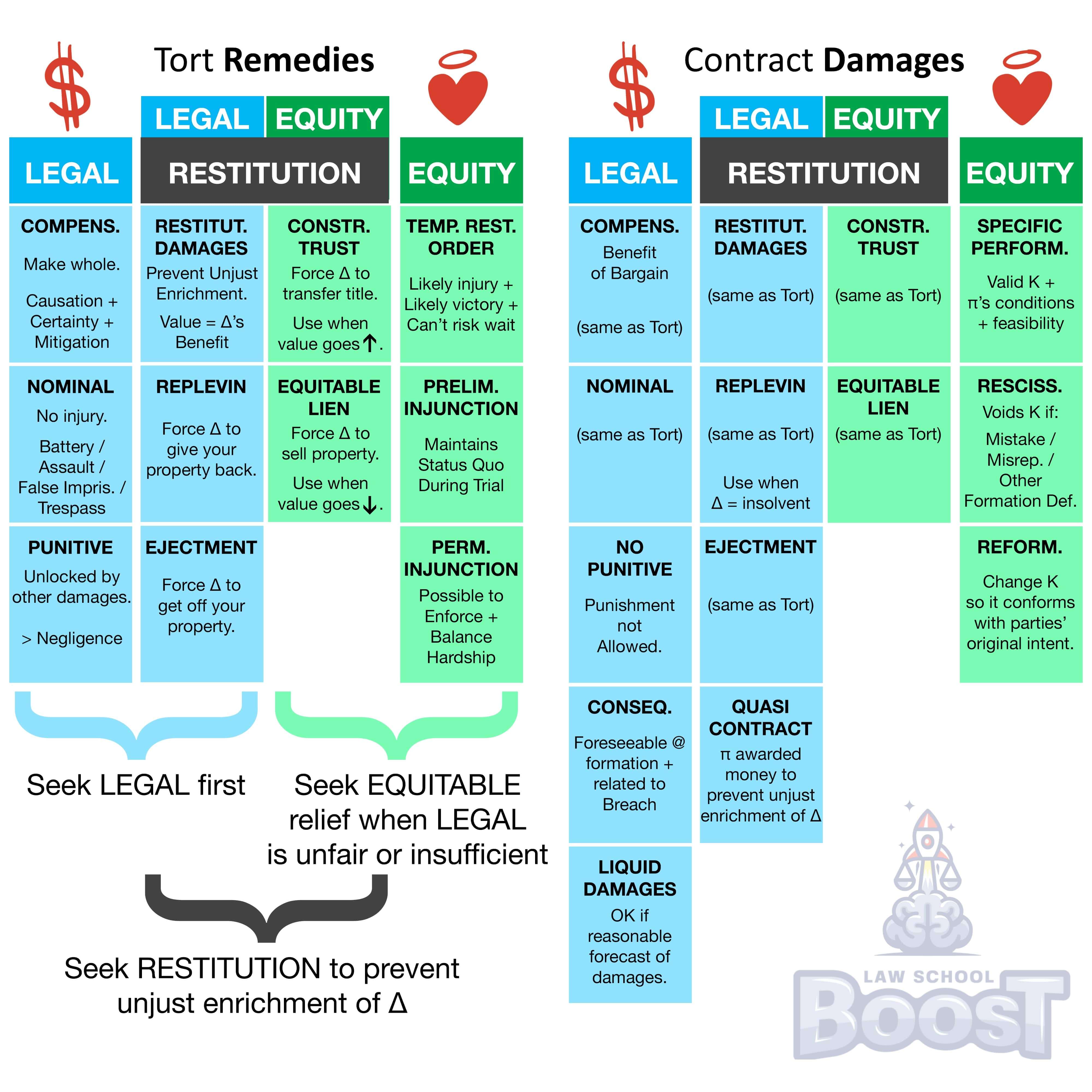
Visual Aids