


Unpublished Flashcard
This flashcard is not publicly visible and is only accessible to admin users.
🚑
Torts • Defamation
TORT#085
Legal Definition
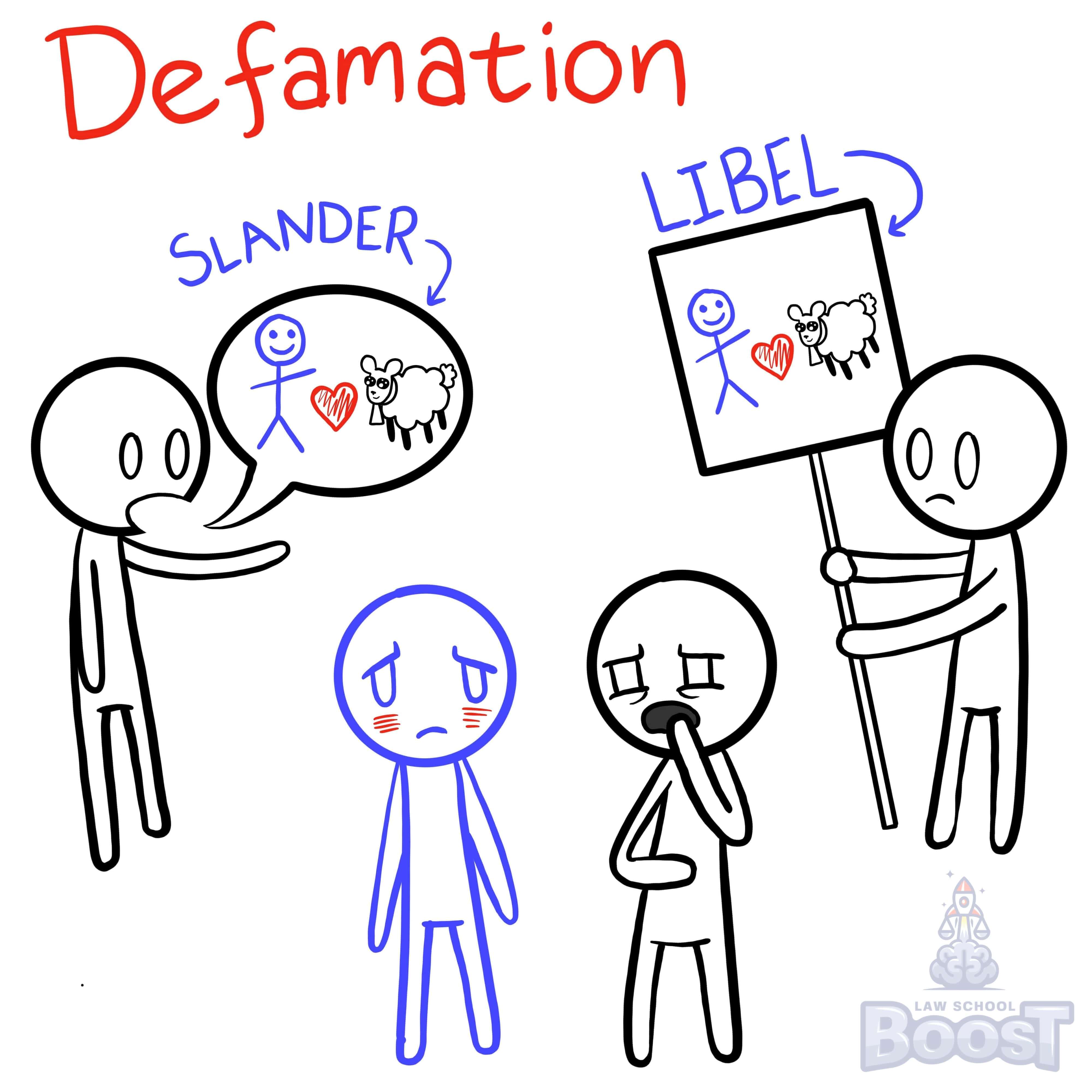
Slander is oral defamation and requires the plaintiff to prove special damages.
Plain English Explanation
When you verbally communicate a statement to another person that harms someone's reputation, you've committed slander. Slander happens in the moment and does not occur when someone records their voice and replays it later (that is a different type of defamation called libel).
Hypothetical
Hypo 1: Sam owns a restaurant and always adheres to health codes. Bob hates Sam. One day, Bob tells Sam that he thinks Sam spits in the food. Result: Bob's statement is defamatory, however, Bob only told it to Sam. To be defamation, Bob must communicate it to a third party (someone other than Sam). Telling Sam is no different than Bob yelling it into an empty chasm.
Hypo 2: Sam owns a restaurant and always adheres to health codes. Bob hates Sam. One day, Bob walks into the restaurant and yells, "Sam, the owner of this restaurant, spits in the food!" Result: Sam can sue Bob for defamation because Bob has made a statement that defames Sam and communicated it to third parties.
Hypo 3: Sam owns a restaurant and always adheres to health codes. Bob hates Sam. One day, while Bob is visiting Antarctica, he tells a random scientist, "Sam spits in the food." Result: Bob's statement is defamatory about Sam, and he communicated it to a third party, but the reality is that the random dude in Antarctica likely has no clue who Bob is talking about. There's a lot of Sam's in the world. So if, for some reason, Sam finds out about this conversation, he likely has no cause of action because his reputation never actually suffered.
Hypo 4: Sam owns a restaurant and always adheres to health codes. Bob hates Sam. One day, while walking outside of the restaurant, Bob points at Sam's restaurant and tells his friend, "Hey, the owner of that restaurant spits in the food." Result: Sam can sue Bob for defamation because even though Bob didn't specifically say Sam's name, his statement made it reasonably certain who he was talking about.
Hypo 5: Sam owns a restaurant called Sam's BBQ and always adheres to health codes. Bob hates Sam. One day, Bob buys a commercial slot on the local radio station that says "Sam spits in the food at Sam's BBQ." Many people, including Sam, hear the commercial. Result: Bob has committed defamation, but not slander. Rather, he committed libel, because the statement was not directly communicated verbally (it was recorded and played later).
Hypo 2: Sam owns a restaurant and always adheres to health codes. Bob hates Sam. One day, Bob walks into the restaurant and yells, "Sam, the owner of this restaurant, spits in the food!" Result: Sam can sue Bob for defamation because Bob has made a statement that defames Sam and communicated it to third parties.
Hypo 3: Sam owns a restaurant and always adheres to health codes. Bob hates Sam. One day, while Bob is visiting Antarctica, he tells a random scientist, "Sam spits in the food." Result: Bob's statement is defamatory about Sam, and he communicated it to a third party, but the reality is that the random dude in Antarctica likely has no clue who Bob is talking about. There's a lot of Sam's in the world. So if, for some reason, Sam finds out about this conversation, he likely has no cause of action because his reputation never actually suffered.
Hypo 4: Sam owns a restaurant and always adheres to health codes. Bob hates Sam. One day, while walking outside of the restaurant, Bob points at Sam's restaurant and tells his friend, "Hey, the owner of that restaurant spits in the food." Result: Sam can sue Bob for defamation because even though Bob didn't specifically say Sam's name, his statement made it reasonably certain who he was talking about.
Hypo 5: Sam owns a restaurant called Sam's BBQ and always adheres to health codes. Bob hates Sam. One day, Bob buys a commercial slot on the local radio station that says "Sam spits in the food at Sam's BBQ." Many people, including Sam, hear the commercial. Result: Bob has committed defamation, but not slander. Rather, he committed libel, because the statement was not directly communicated verbally (it was recorded and played later).
Visual Aids