


🚑
Torts • Products Liability
TORT#071
Legal Definition
The 5 theories of products liability are:
1. Intent
2. Negligence
3. Strict Liability
4. Implied Warranties of Merchantability and Fitness for a particular purpose
5. Misrepresentation
1. Intent
2. Negligence
3. Strict Liability
4. Implied Warranties of Merchantability and Fitness for a particular purpose
5. Misrepresentation
Plain English Explanation
"Products liability" involves the liability of a supplier or manufacturer of goods when those goods cause harm to someone. In other words, whenever someone is harmed by a product and wants to sue either the creator of the product or the store where they bought the product, the question is, "What makes the defendant liable?" There are 5 options.
The first is intent. This is obvious, and pretty rare. It basically means that the product was intentionally made to harm its user.
The second is standard negligence, which examines whether or not the manufacturer breached a duty of care in creating or handling the product that eventually caused harm.
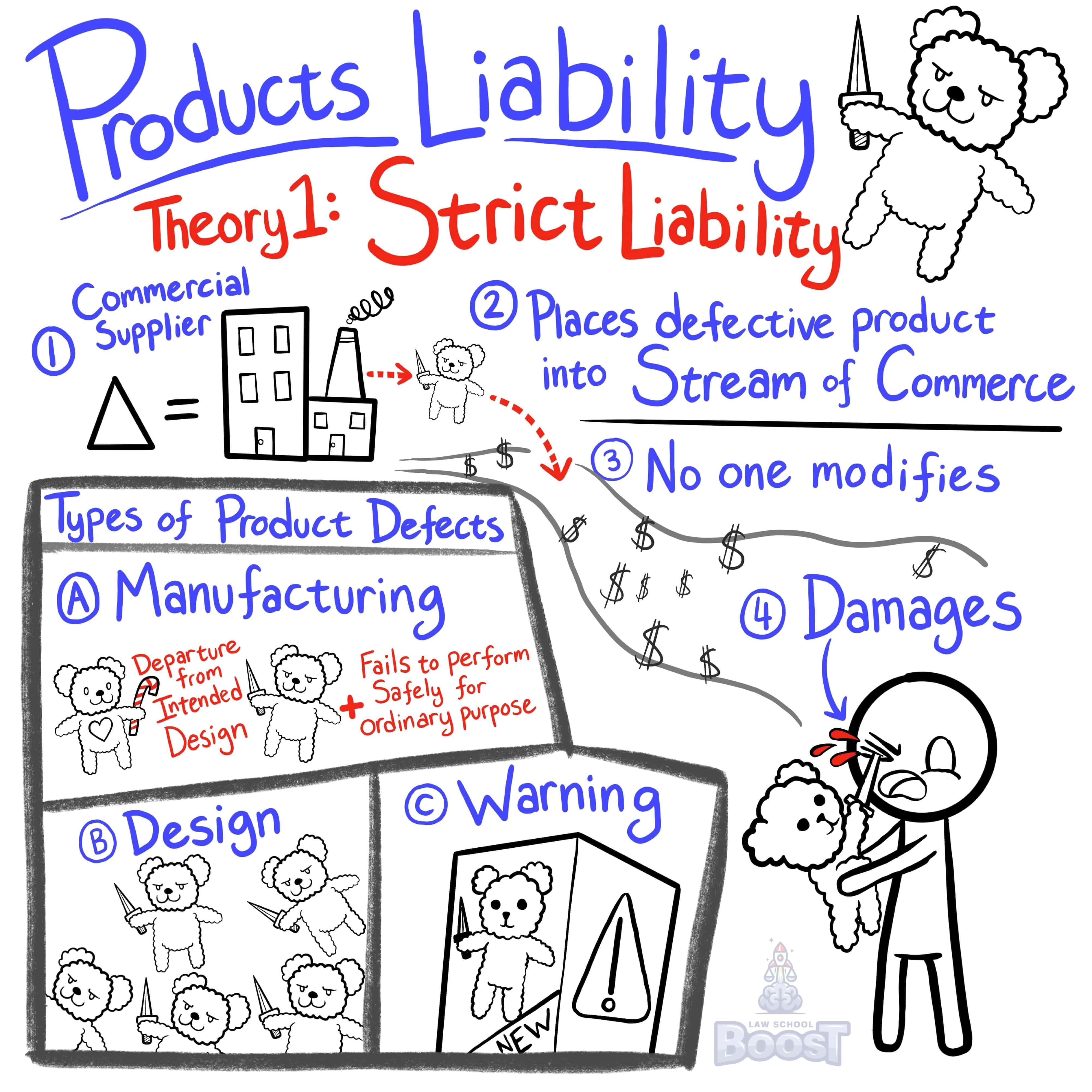
The third, and most commonly tested, is strict liability, which requires the product to have some sort of defect.
The fourth is implied warranty of merchantability and fitness for a particular purpose. This generally happens when someone buys something based on the recommendation of a salesperson who is aware of the customer's specific needs. For example, if a extremely obese person comes into a bike shop and asks the salesperson to select a bike for them, whichever bike the salesperson chooses should be able to carry the weight of the customer. Though there is a general rule of "buyer beware" in their purchasing habits, a customer should be able to trust that a salesperson will give them a heads up if it's clear that the product they are buying isn't appropriate for their needs.
The fifth is misrepresentation, which involves either an express warranty about an item that is ultimately breached, or lying to a customer about the product. For example, if an extremely obese person comes into a bike shop and asks for help purchasing a bike, an express warranty would occur if the salesperson said, "This bike will hold your weight." If they believe it to be true, it is an express warranty. If they know it is a lie, it is misrepresentation.
The first is intent. This is obvious, and pretty rare. It basically means that the product was intentionally made to harm its user.
The second is standard negligence, which examines whether or not the manufacturer breached a duty of care in creating or handling the product that eventually caused harm.
The third, and most commonly tested, is strict liability, which requires the product to have some sort of defect.
The fourth is implied warranty of merchantability and fitness for a particular purpose. This generally happens when someone buys something based on the recommendation of a salesperson who is aware of the customer's specific needs. For example, if a extremely obese person comes into a bike shop and asks the salesperson to select a bike for them, whichever bike the salesperson chooses should be able to carry the weight of the customer. Though there is a general rule of "buyer beware" in their purchasing habits, a customer should be able to trust that a salesperson will give them a heads up if it's clear that the product they are buying isn't appropriate for their needs.
The fifth is misrepresentation, which involves either an express warranty about an item that is ultimately breached, or lying to a customer about the product. For example, if an extremely obese person comes into a bike shop and asks for help purchasing a bike, an express warranty would occur if the salesperson said, "This bike will hold your weight." If they believe it to be true, it is an express warranty. If they know it is a lie, it is misrepresentation.
Visual Aids