


🤝
Contracts • Terms of the Contract
K#088
Legal Definition
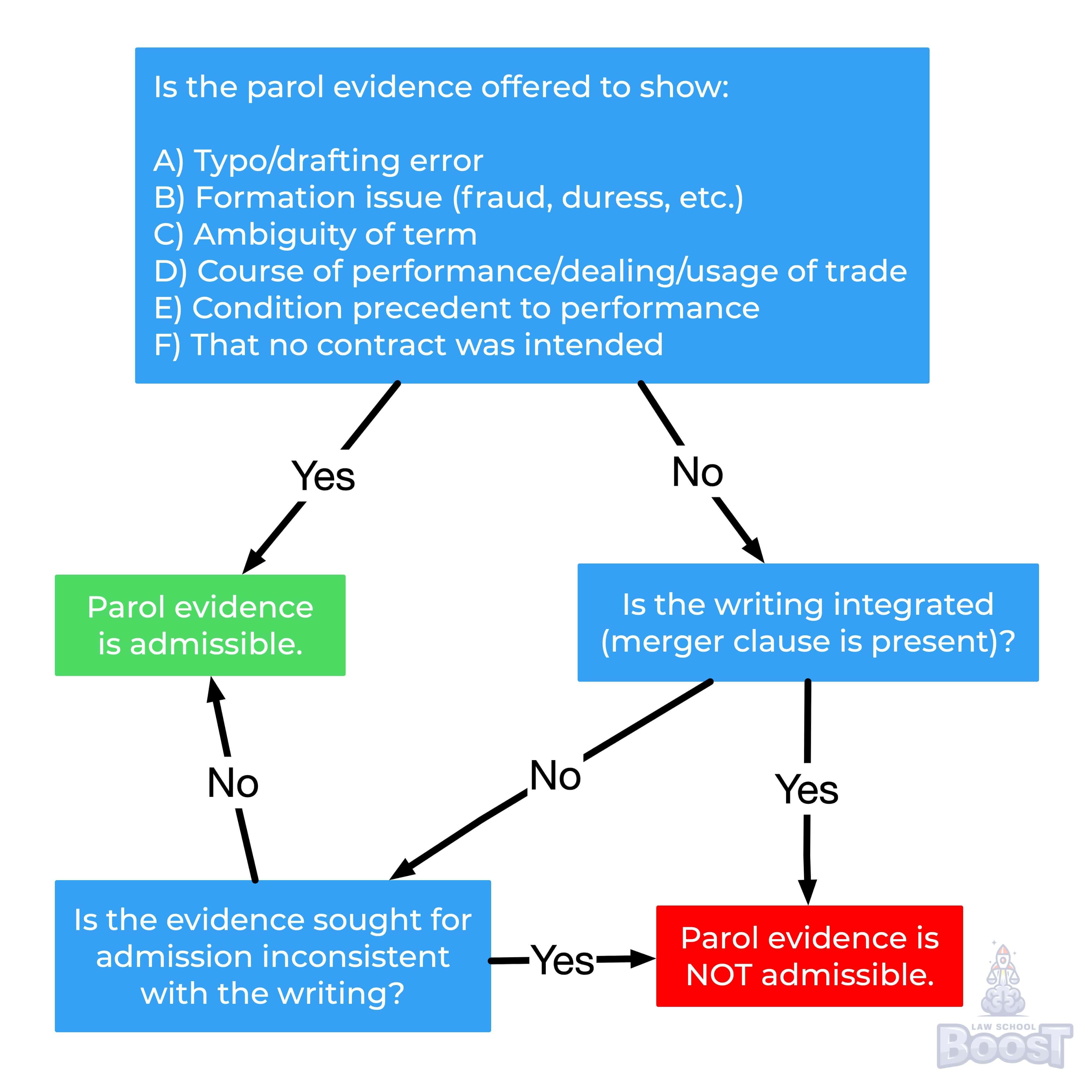
The rule is generally the same as common law, except a party cannot seek to add consistent additional terms if: (1) there is a merger clause; or (2) the courts find the contract was intended to be the complete and exclusive statement of the agreement. However, a contract's written terms may be explained or supplemented by: (1) course of performance, (2) course of dealing, and (3) custom and usage.
Plain English Explanation
Under the UCC, additional terms that are consistent with the terms in the written contract are allowed unless the contract has merger clause (discussed in other cards) or was intended to be a complete, final agreement. In other words, as long as there is no clause preventing the addition of new terms (or intention that no terms are allowed in the contract), courts will add them as long as they fit in with the spirit and purpose of the contract (and don't undermine any parts of it).
Additionally, keep in mind that courts will allow terms to be explained or supplemented by: (1) "course of performance," which looks at the history of performance between two parties and accepts any patterns that were previously allowed to be allowed in the future; (2) "course of dealing," which looks at the history of previous transactions between parties; and (3) "custom and usage," which looks at the norms within the industry.
Additionally, keep in mind that courts will allow terms to be explained or supplemented by: (1) "course of performance," which looks at the history of performance between two parties and accepts any patterns that were previously allowed to be allowed in the future; (2) "course of dealing," which looks at the history of previous transactions between parties; and (3) "custom and usage," which looks at the norms within the industry.
Hypothetical
Hypo 1: Bob orders 100 widgets from Sam. The contract expressly requires that they be delivered on Saturday afternoon between 1:00 pm and 2:00 pm at Bob's home address, not his warehouse. Sam delivers the 100 widgets to Bob on Friday at 10:00 am at Bob's warehouse. Upon being sued for breach, Sam offers as evidence a discussion he had with Bob where Bob said he doesn't mind if Sam drops them off at his warehouse. Result: The previous discussion Sam had with Bob is parol evidence, and it conflicts with explicit terms of their agreement. As such, it is inadmissible.
Visual Aids