


Unpublished Flashcard
This flashcard is not publicly visible and is only accessible to admin users.
🫶
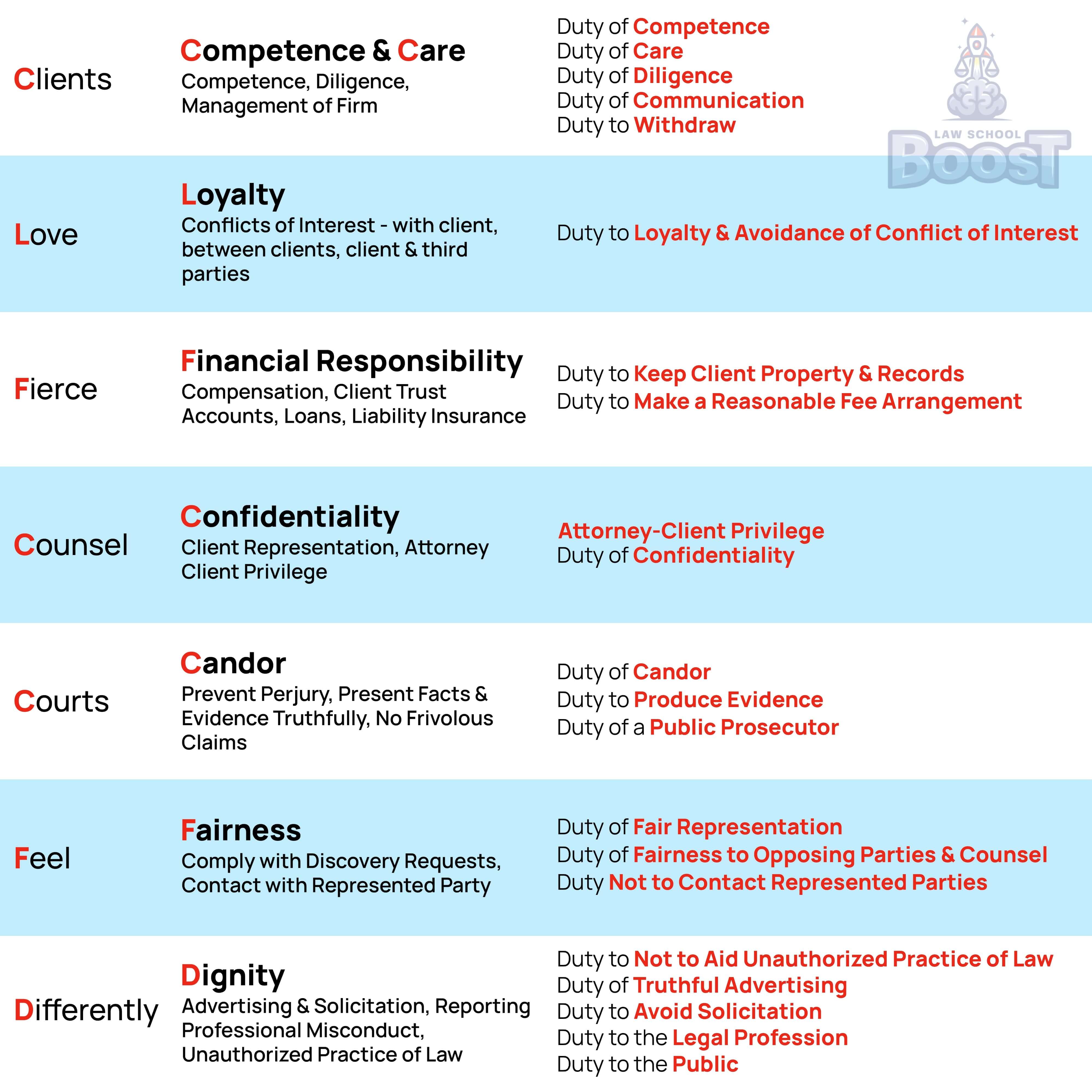
Prof Responsibility • Financial Duties
PR#015
Legal Definition
A contingent fee may be calculated in two ways: (1) on the gross recovery; or (2) after costs are deducted. According to Rule 1.5(c), the method of calculation must be disclosed in writing in the contingent fee agreement.
Plain English Explanation
When a lawyer takes a case on contingency, they're essentially betting on winning. There are a couple methods to calculate a contingent fee:
The first method is based on the gross recovery. This means the lawyer's percentage is taken from the total amount won, before any expenses are deducted. Let's say you win $100,000, and your lawyer charges 33%. With this method, they'd get $33,000, regardless of how much was spent on case expenses.
The second method is based on the net recovery. Here, the case expenses are subtracted first, and then the lawyer takes their percentage from what's left. Using the same example, if there were $10,000 in expenses, the lawyer would take 33% of $90,000, which is $29,700.
As you can see, the difference can be significant, especially in cases with high expenses. That's why the rule insists that lawyers must spell out which method they're using in the written agreement. This transparency is important for clients to understand exactly how much they'll pay and how much they'll keep if they win and helps prevent misunderstandings and potential disputes down the line. It also allows clients to compare different lawyers' fee structures more easily. And it encourages lawyers to be upfront about their billing practices.
The first method is based on the gross recovery. This means the lawyer's percentage is taken from the total amount won, before any expenses are deducted. Let's say you win $100,000, and your lawyer charges 33%. With this method, they'd get $33,000, regardless of how much was spent on case expenses.
The second method is based on the net recovery. Here, the case expenses are subtracted first, and then the lawyer takes their percentage from what's left. Using the same example, if there were $10,000 in expenses, the lawyer would take 33% of $90,000, which is $29,700.
As you can see, the difference can be significant, especially in cases with high expenses. That's why the rule insists that lawyers must spell out which method they're using in the written agreement. This transparency is important for clients to understand exactly how much they'll pay and how much they'll keep if they win and helps prevent misunderstandings and potential disputes down the line. It also allows clients to compare different lawyers' fee structures more easily. And it encourages lawyers to be upfront about their billing practices.
Hypothetical
Hypo 1: Sam is injured in a car accident and hires Bob as his lawyer. Bob presents a written contingency fee agreement stating he'll receive 33% of the gross recovery. The agreement clearly explains that this means Bob's fee will be calculated before deducting any case expenses. Sam signs the agreement. After winning a $100,000 settlement and incurring $10,000 in expenses, Bob takes $33,000 as his fee. Result: Bob correctly disclosed the calculation method in writing, and his fee was accurately calculated based on the gross amount, regardless of expenses. Sam receives $57,000 after Bob's fee and expenses are deducted.
Hypo 2: Sam, a small business owner, hires Bob to sue a competitor for trademark infringement. Bob's written agreement states he'll receive 40% of the recovery but doesn't specify whether it's based on gross or net recovery. They win a $500,000 judgment, with $50,000 in expenses. Bob calculates his fee as 40% of $450,000 (the net recovery). Result: In this case, Bob has failed to comply with the rule. Even though he calculated his fee based on the net recovery, which might be more favorable to Sam, he didn't specify this method in the written agreement. This lack of clarity violates the rule and could lead to disputes, even if the chosen method benefited the client.
Hypo 3: Sam hires Bob for a medical malpractice case. The written agreement states Bob will receive "35% of any recovery" without specifying gross or net. They win a $1,000,000 verdict with $100,000 in expenses. Bob takes 35% of the gross amount ($350,000). Sam argues he meant 35% of the net. Result: This scenario highlights the importance of clear specification in the agreement. The ambiguous language leaves room for interpretation and dispute. While Bob might argue that "any recovery" implies gross recovery, the lack of explicit clarification violates the rule. This situation could lead to a fee dispute and potential ethical issues for Bob.
Hypo 4: Sam, in a product liability case, receives a contingency fee agreement from Bob. The agreement clearly states that Bob will receive 30% of the net recovery, explaining that this means his fee will be calculated after deducting case expenses. They win a $200,000 settlement, with $20,000 in expenses. Bob calculates his fee as 30% of $180,000. Result: This is a proper application of the net recovery method. Bob correctly disclosed the calculation method in writing and accurately applied it. His fee of $54,000 is based on the net recovery of $180,000, leaving Sam with $126,000 after all deductions. This transparency complies with the rule and helps prevent misunderstandings.
Hypo 5: Sam hires Bob for an employment discrimination case. Bob's written agreement includes two options for fee calculation: 40% of gross recovery or 45% of net recovery, allowing Sam to choose. Sam selects the net recovery option and signs the agreement. They win $300,000, with $30,000 in expenses. Bob calculates his fee as 45% of $270,000. Result: This scenario demonstrates a creative approach that still complies with the rule. By clearly explaining both methods and allowing Sam to choose, Bob has met the requirement for written disclosure. The chosen method (net recovery) is clearly specified, and Bob correctly applies it in his fee calculation. This approach gives the client more control while still adhering to the rule's requirements.
Hypo 2: Sam, a small business owner, hires Bob to sue a competitor for trademark infringement. Bob's written agreement states he'll receive 40% of the recovery but doesn't specify whether it's based on gross or net recovery. They win a $500,000 judgment, with $50,000 in expenses. Bob calculates his fee as 40% of $450,000 (the net recovery). Result: In this case, Bob has failed to comply with the rule. Even though he calculated his fee based on the net recovery, which might be more favorable to Sam, he didn't specify this method in the written agreement. This lack of clarity violates the rule and could lead to disputes, even if the chosen method benefited the client.
Hypo 3: Sam hires Bob for a medical malpractice case. The written agreement states Bob will receive "35% of any recovery" without specifying gross or net. They win a $1,000,000 verdict with $100,000 in expenses. Bob takes 35% of the gross amount ($350,000). Sam argues he meant 35% of the net. Result: This scenario highlights the importance of clear specification in the agreement. The ambiguous language leaves room for interpretation and dispute. While Bob might argue that "any recovery" implies gross recovery, the lack of explicit clarification violates the rule. This situation could lead to a fee dispute and potential ethical issues for Bob.
Hypo 4: Sam, in a product liability case, receives a contingency fee agreement from Bob. The agreement clearly states that Bob will receive 30% of the net recovery, explaining that this means his fee will be calculated after deducting case expenses. They win a $200,000 settlement, with $20,000 in expenses. Bob calculates his fee as 30% of $180,000. Result: This is a proper application of the net recovery method. Bob correctly disclosed the calculation method in writing and accurately applied it. His fee of $54,000 is based on the net recovery of $180,000, leaving Sam with $126,000 after all deductions. This transparency complies with the rule and helps prevent misunderstandings.
Hypo 5: Sam hires Bob for an employment discrimination case. Bob's written agreement includes two options for fee calculation: 40% of gross recovery or 45% of net recovery, allowing Sam to choose. Sam selects the net recovery option and signs the agreement. They win $300,000, with $30,000 in expenses. Bob calculates his fee as 45% of $270,000. Result: This scenario demonstrates a creative approach that still complies with the rule. By clearly explaining both methods and allowing Sam to choose, Bob has met the requirement for written disclosure. The chosen method (net recovery) is clearly specified, and Bob correctly applies it in his fee calculation. This approach gives the client more control while still adhering to the rule's requirements.
Visual Aids