


🏠
Real Property • Landlord-Tenant
PROP#088
Legal Definition
The assignee and the landlord are in privity of estate, thus each is liable to the other for covenants in the lease that run with the land. Rent always runs with the land, so the assignee owes rent directly to the landlord. While the original tenant is no longer in privity of estate, he remains liable to the landlord because the two parties are still in privity of contract.
Plain English Explanation
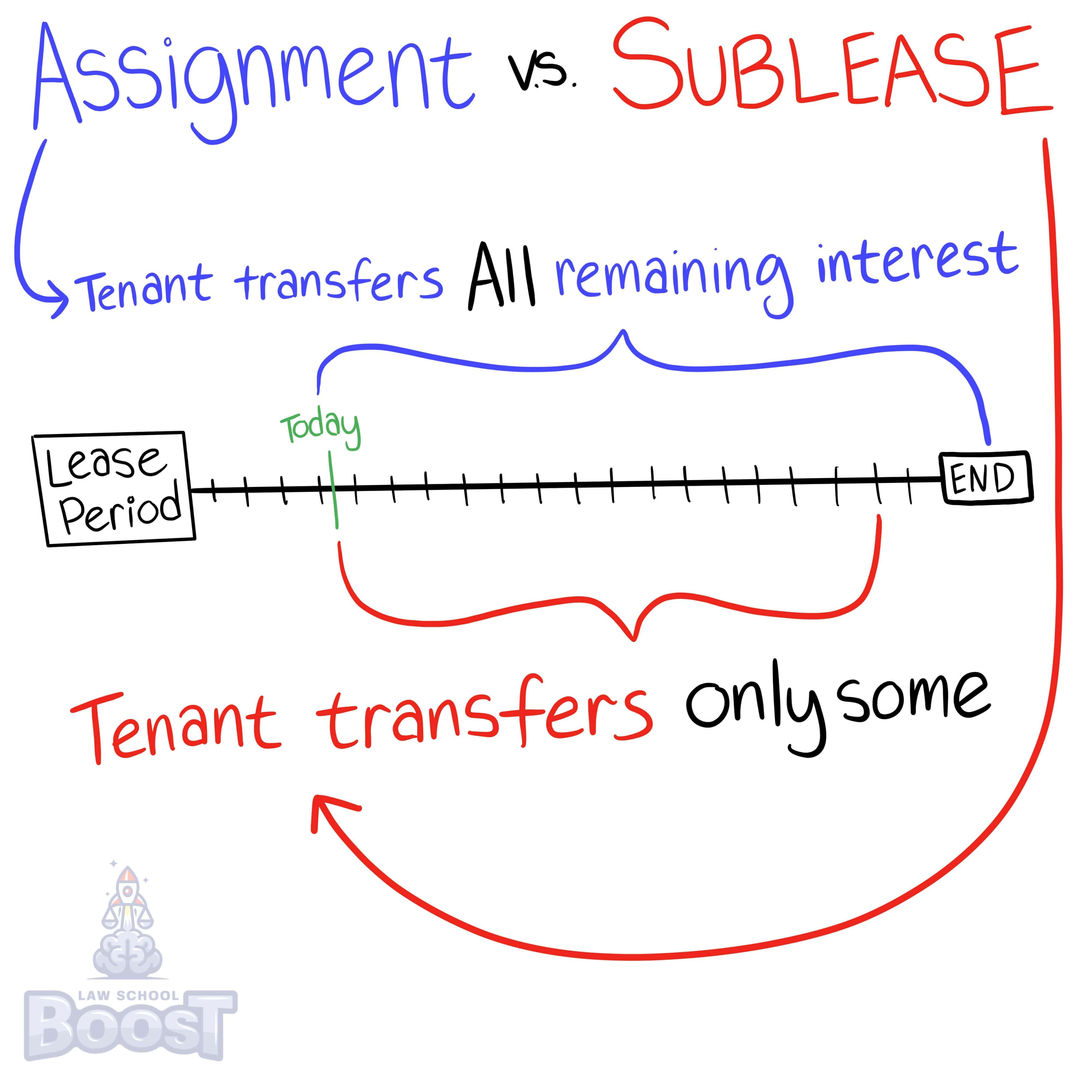
When one tenant assigns their lease to a third party, we need to figure out who owes duties to who, and what rights the new parties have. In other words, when Amy rents property from Bob and signs a lease with him, it's clear that Amy is the tenant and Bob is the landlord, and Amy has duties to Bob, and Bob has duties to Amy. But when Amy assigns her lease to Carl, which duties does Carl owe to Bob? And which duties does Bob owe Carl? And why do they owe each other duties?
First, we look to something called privity of estate. "Privity" means a relation between two parties that is recognized by law. You'll bump into "privity" in many of your law classes, like contract law. Privity of estate means there is a legal relationship between parties because they share a legal interest in property. In other words, even though Carl has never met Bob, and even though Carl did not sign a lease with Bob, Bob is the landlord and Carl is the new tenant on Bob's property, so through privity of estate, Carl owes duties to Bob and Bob owes duties to Carl.
Which duties? Those that "run with the land", meaning obligations that are always, legally associated with the land itself. One such obligation is paying rent. Carl must pay rent to Bob. But what happens if Carl decides not to pay rent to Bob? Then Bob can go after Amy.
Even though Amy is no longer Bob's tenant, and no longer in privity of estate, Amy signed a contract with Bob (the lease), which means Amy is still in privity of contract with Bob. This effectively makes Amy liable for Carl's use of the property.
Knowing these distinctions is important because when you argue that a landlord has the right to force a current or former tenant to do something, that right will either be due to privity of estate (because the person is in possession of the property) or because privity of contract (because the person signed a contract with the landlord).
First, we look to something called privity of estate. "Privity" means a relation between two parties that is recognized by law. You'll bump into "privity" in many of your law classes, like contract law. Privity of estate means there is a legal relationship between parties because they share a legal interest in property. In other words, even though Carl has never met Bob, and even though Carl did not sign a lease with Bob, Bob is the landlord and Carl is the new tenant on Bob's property, so through privity of estate, Carl owes duties to Bob and Bob owes duties to Carl.
Which duties? Those that "run with the land", meaning obligations that are always, legally associated with the land itself. One such obligation is paying rent. Carl must pay rent to Bob. But what happens if Carl decides not to pay rent to Bob? Then Bob can go after Amy.
Even though Amy is no longer Bob's tenant, and no longer in privity of estate, Amy signed a contract with Bob (the lease), which means Amy is still in privity of contract with Bob. This effectively makes Amy liable for Carl's use of the property.
Knowing these distinctions is important because when you argue that a landlord has the right to force a current or former tenant to do something, that right will either be due to privity of estate (because the person is in possession of the property) or because privity of contract (because the person signed a contract with the landlord).
Hypothetical
Hypo 1: Amy rents Blackacre from Bob and signs a 1 year lease. Blackacre is a large parcel of grass with a house on it. After 3 months, Amy assigns her lease to Carl. Carl moves in and decides he no longer likes to be surrounded by so much grass because he hates bugs. As such, he begins tearing it up and salting the earth so nothing will grow and all the bugs die. Bob stops by the property and sees all the damage to Blackacre. Result: Bob can sue Carl for damage, even though he doesn't have a contract with Carl, under privity of estate. If Carl cannot afford to cover the cost of the damage, Bob can sue Amy as well, under privity of contract.
Visual Aids