


🏠
Real Property • Landlord-Tenant
PROP#062
Legal Definition
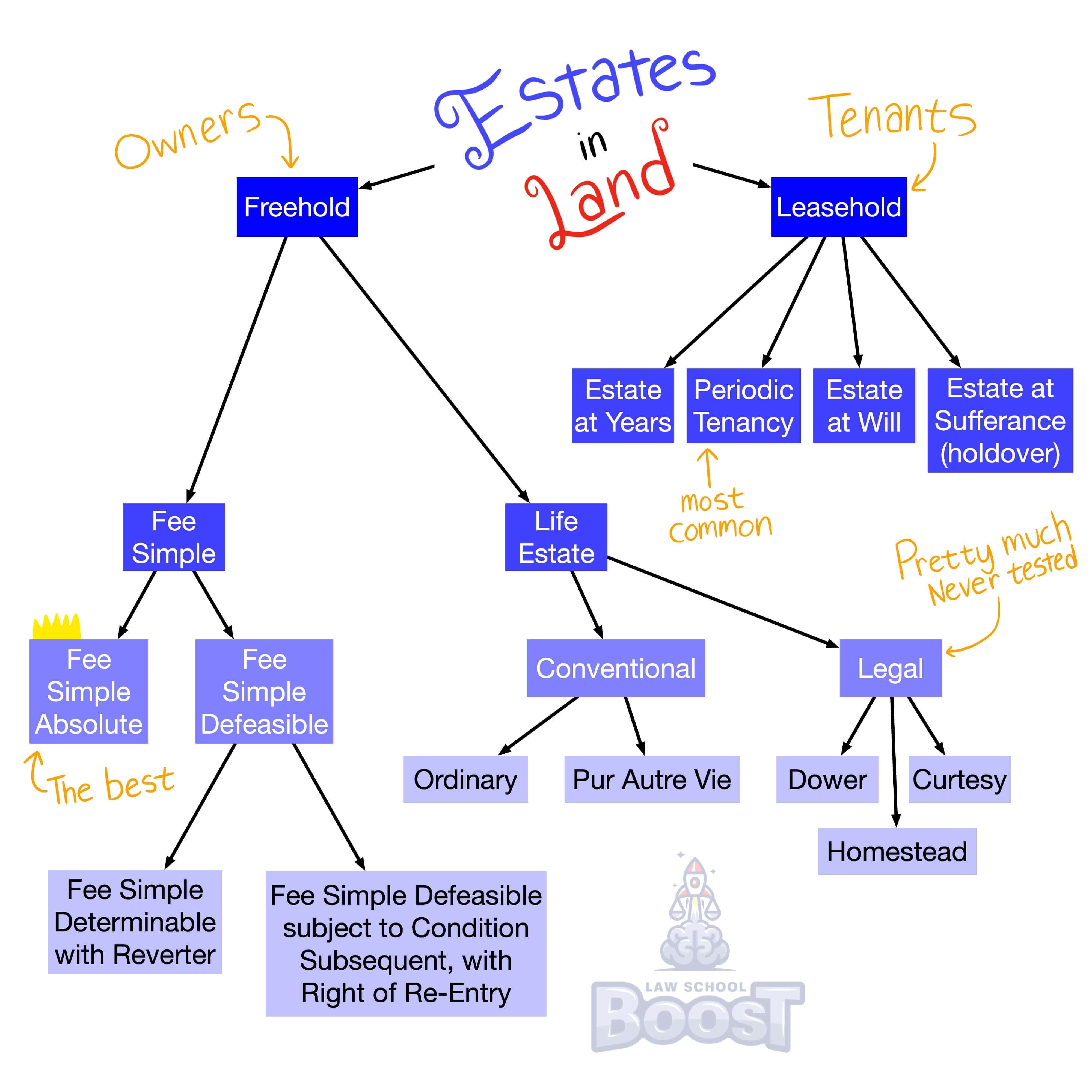
A periodic tenancy is one that continues for successive periods, and may be created by express agreement, implication, or operation of law (where the tenant holds over). It is automatically renewed until a party provides proper notice of termination, typically one full period in advance and timed to terminate at the end of a period. However, a year-to-year lease requires 6 months notice.
Plain English Explanation
If you've ever rented an apartment or housing, you've likely had a periodic tenancy. In fact, many apartments are leased on a "month to month", periodic basis that is open-ended with no specific termination date. There are a few ways to create a periodic tenancy:
(1) An express agreement, like a formal, written lease that identifies the tenancy as some "period to period" (generally either month-to-month or year-to-year, but any period will suffice, such as "quarter to quarter").
(2) Implication, like if you were to allow a friend to live with you for an extended period of time, it may become implied that they are a month to month tenant.
(3) Via operation of law. For example, imagine if Amy had a tenancy for years that was set to expire on May 1st. On May 1st, Amy doesn't move out. Instead, Amy sends her landlord a check for another month of rent. If the landlord cashes the check, it will be accepting the fact that Amy wants to stay and, by default, Amy will now have a periodic tenancy (likely month to month).
Note that exams love to test the notice period for terminating a periodic tenancy. Generally speaking, notice is equal to one full period in advance. In other words, a month-to-month tenancy requires 1 month notice. A week-to-week tenancy requires 1 week notice. The only type of periodic tenancy that doesn't follow this rule is one that is year-to-year, which generally requires 6 months notice to terminate.
(1) An express agreement, like a formal, written lease that identifies the tenancy as some "period to period" (generally either month-to-month or year-to-year, but any period will suffice, such as "quarter to quarter").
(2) Implication, like if you were to allow a friend to live with you for an extended period of time, it may become implied that they are a month to month tenant.
(3) Via operation of law. For example, imagine if Amy had a tenancy for years that was set to expire on May 1st. On May 1st, Amy doesn't move out. Instead, Amy sends her landlord a check for another month of rent. If the landlord cashes the check, it will be accepting the fact that Amy wants to stay and, by default, Amy will now have a periodic tenancy (likely month to month).
Note that exams love to test the notice period for terminating a periodic tenancy. Generally speaking, notice is equal to one full period in advance. In other words, a month-to-month tenancy requires 1 month notice. A week-to-week tenancy requires 1 week notice. The only type of periodic tenancy that doesn't follow this rule is one that is year-to-year, which generally requires 6 months notice to terminate.
Hypothetical
Hypo 1: Amy rented an apartment from Bob for $1,500 per month. Amy signs a 6 month lease that explicitly states she must move out by the end of 6 months. Result: Amy has a tenancy for years
Hypo 2: Amy rented an apartment from Bob for $1,500 per month. Amy signs a 6 month lease that allows her to stay on as a month-to-month tenant. Result: Amy has a tenancy for years that will turn into a periodic tenancy if she chooses to stay beyond 6 months.
Hypo 3: Same facts as Hypo 2, except after 7.5 months Amy decides she no longer wants to live there and tells Bob she wants to immediately terminate her lease. Result: Amy has a periodic tenancy and is month to month. Generally, periodic tenancies require 1 period of notice to terminate. Here, that period would be 1 month. In other words, Amy must give Bob 30 days of notice that she intends to terminate her lease.
Hypo 2: Amy rented an apartment from Bob for $1,500 per month. Amy signs a 6 month lease that allows her to stay on as a month-to-month tenant. Result: Amy has a tenancy for years that will turn into a periodic tenancy if she chooses to stay beyond 6 months.
Hypo 3: Same facts as Hypo 2, except after 7.5 months Amy decides she no longer wants to live there and tells Bob she wants to immediately terminate her lease. Result: Amy has a periodic tenancy and is month to month. Generally, periodic tenancies require 1 period of notice to terminate. Here, that period would be 1 month. In other words, Amy must give Bob 30 days of notice that she intends to terminate her lease.
Visual Aids