


Unpublished Flashcard
This flashcard is not publicly visible and is only accessible to admin users.
🤝
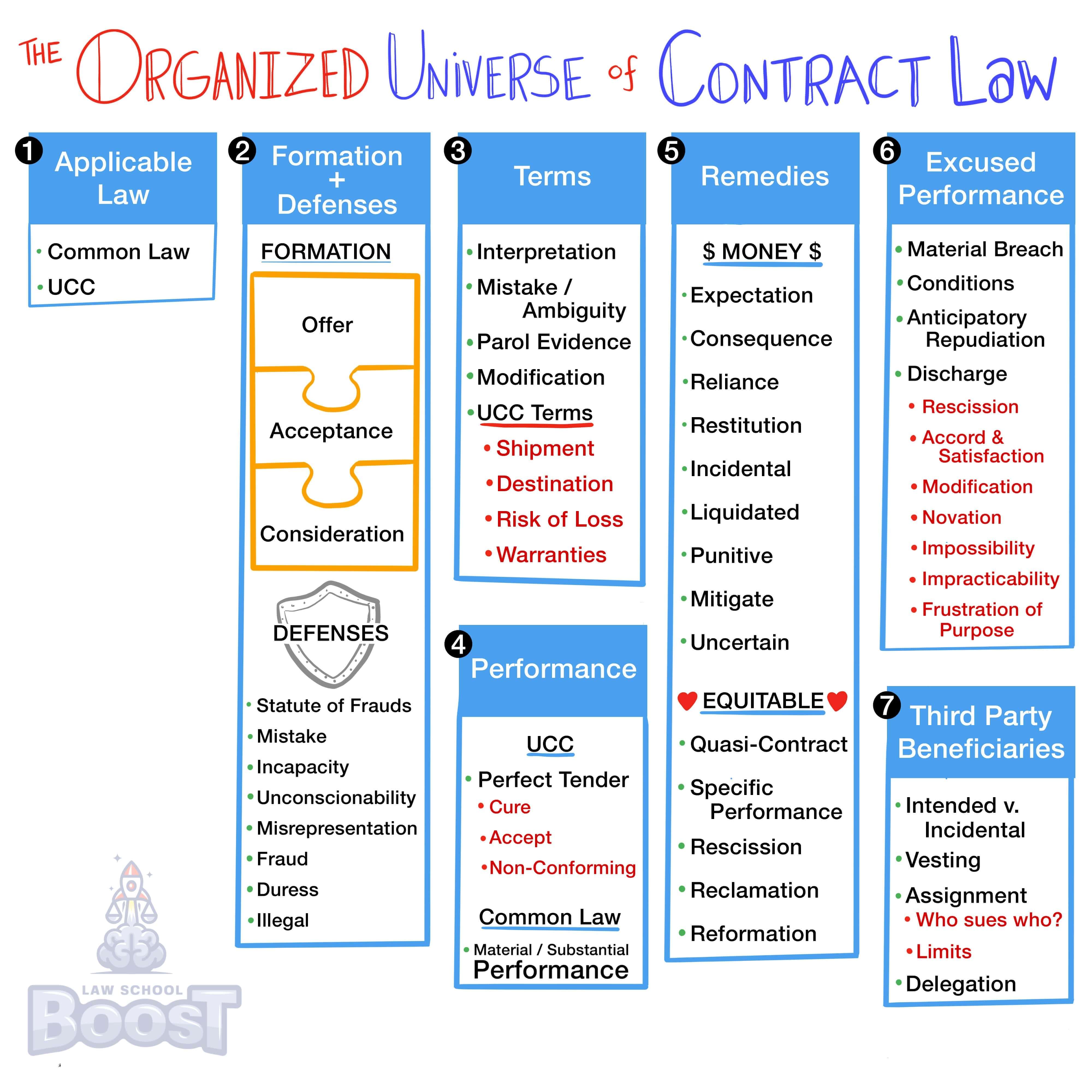
Contracts • Terms of the Contract
K#077
Legal Definition
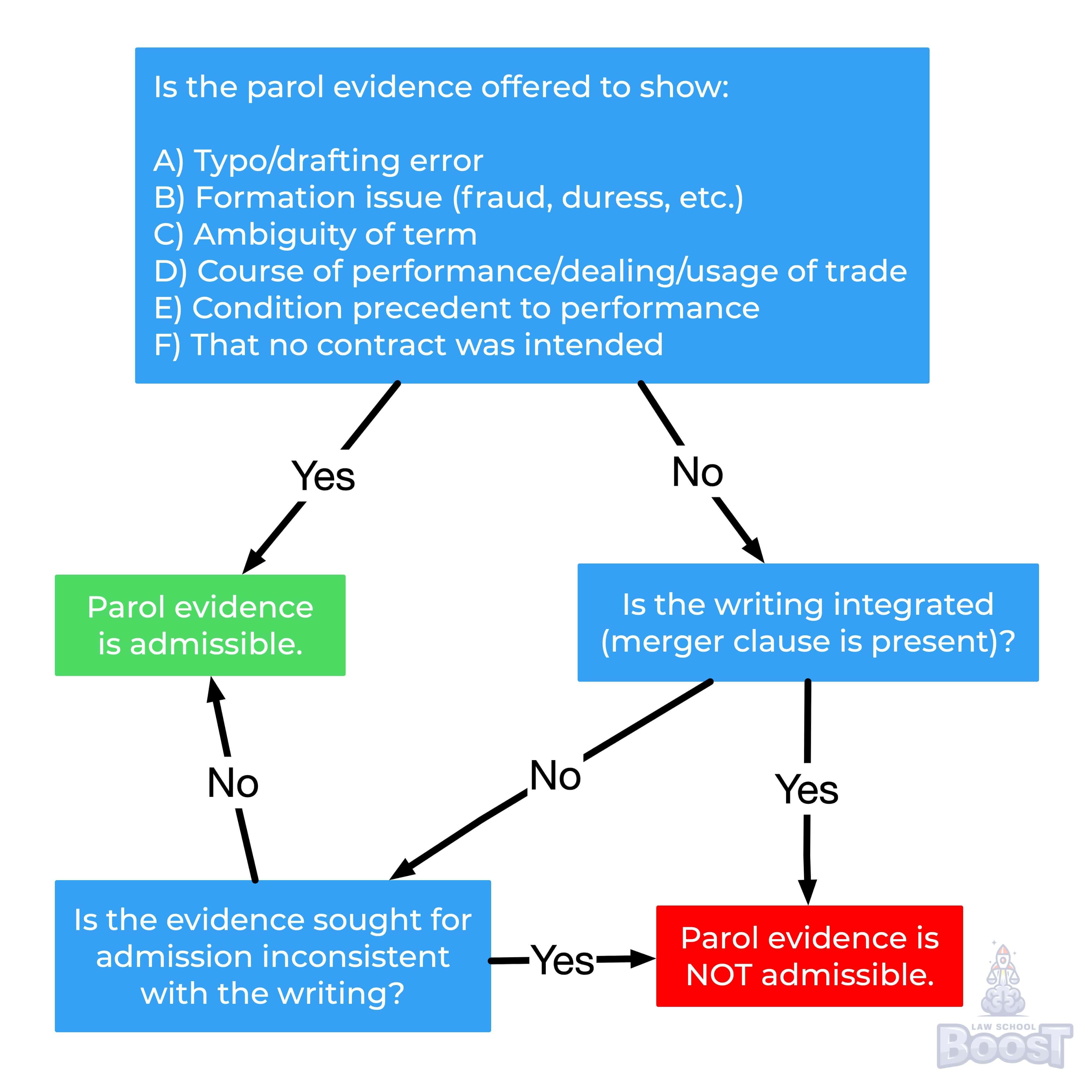
Under the Parol Evidence Rule, when the parties to a contract express their agreement in a writing with the intent that it embody the final expression of their bargain (i.e., an integration), any other expressions, either written or oral, made prior to the writing, and any oral expressions contemporaneous with the writing, are inadmissible to vary the terms of the writing. The purpose for the rule is that the final written iteration of a deal is more reliable than anything said or written earlier.
Plain English Explanation
There's a lot going on in here, so let's break it all down. First off, parol evidence is any oral or written words from a party prior to the finalization of a contract. In other words, after parties negotiate and discuss the terms of an agreement and finally create a written, final contract, any evidence of those prior negotiations is known as "parol evidence." This includes all of the e-mails, text messages, phone calls, and in-person conversations discussing the agreement during the creation of the final contract.
The "Parol Evidence Rule" is the rule that courts follow when they figure out how to deal with parol evidence. Generally speaking, once a contract is finalized and it is clear that the parties intend the contract to be the final version of their agreement, any evidence of previous discussions that try to change the meaning or terms of the contract are prevented from being introduced as evidence. In other words, once a contract is finalized and terms are set, a party cannot say, "Well, hold on, let me show you this email from a month before we signed the contract where we agreed to different terms!" Such parol evidence is inadmissible.
Note that there are some exceptions to this rule, which will be discussed in other cards. The main thing to note is simply that when a final, written contract exists, then a court will generally try to avoid considering any evidence outside of that contract.
The "Parol Evidence Rule" is the rule that courts follow when they figure out how to deal with parol evidence. Generally speaking, once a contract is finalized and it is clear that the parties intend the contract to be the final version of their agreement, any evidence of previous discussions that try to change the meaning or terms of the contract are prevented from being introduced as evidence. In other words, once a contract is finalized and terms are set, a party cannot say, "Well, hold on, let me show you this email from a month before we signed the contract where we agreed to different terms!" Such parol evidence is inadmissible.
Note that there are some exceptions to this rule, which will be discussed in other cards. The main thing to note is simply that when a final, written contract exists, then a court will generally try to avoid considering any evidence outside of that contract.
Visual Aids