



Unpublished Flashcard
This flashcard is not publicly visible and is only accessible to admin users.
🤝
Contracts • Excuse of Non-Performance
REM#064
Legal Definition
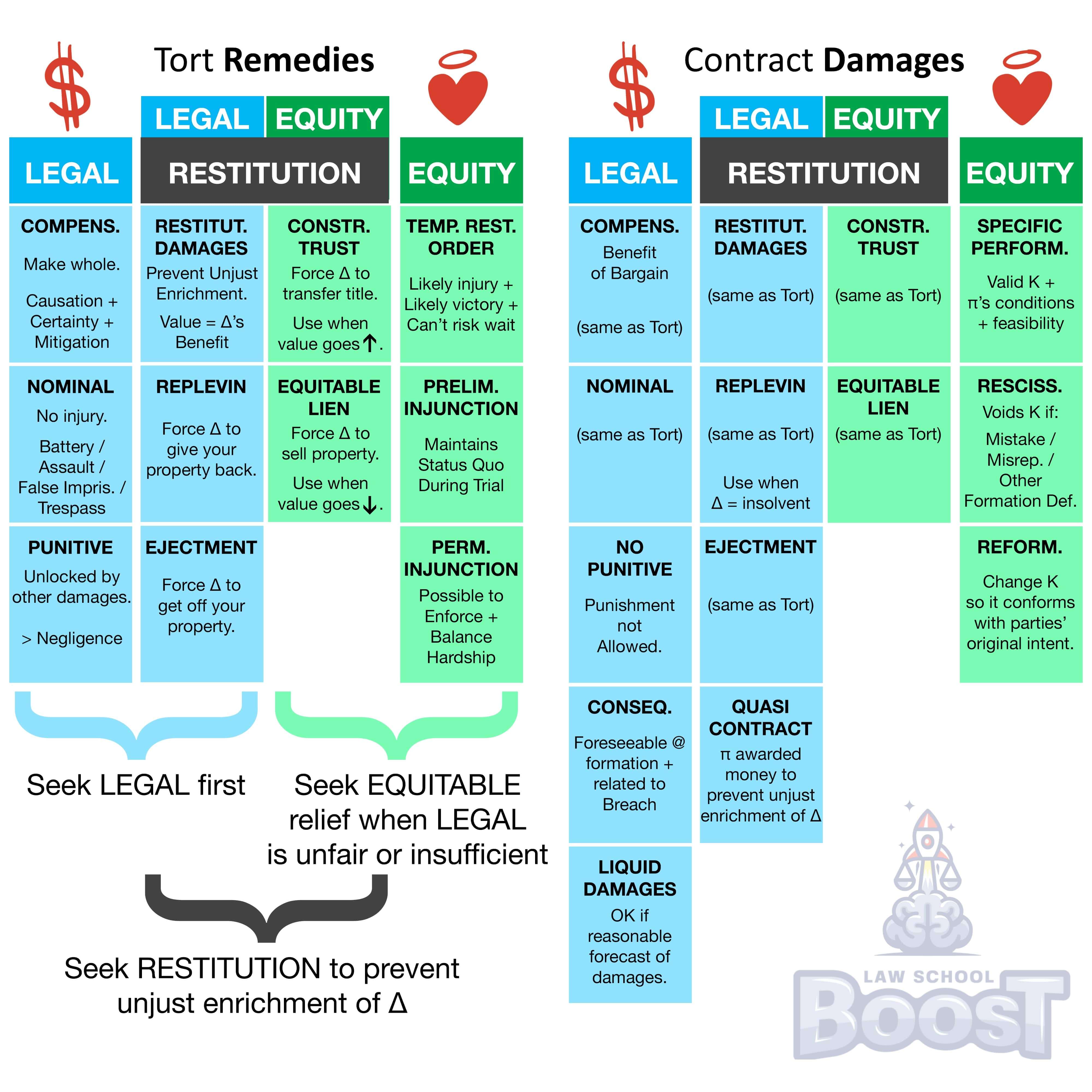
Where a court grants rescission, the original contract is considered voidable and rescinded. Grounds for rescission include: (1) various defenses to formation, (2) mutual mistake, (3) unilateral mistake, and (4) misrepresentation.
Plain English Explanation
Rescission is a legal term that means undoing or canceling a contract. When a court allows rescission, it's like saying the contract never existed in the first place. There are several reasons why a contract might be undone:
(1) There were problems when the contract was first made.
(2) Both parties made a mistake about something important.
(3) Only one party made a mistake, but it was a big one.
(4) Someone lied or didn't tell the whole truth when making the contract.
The purpose of this rule is to make things fair. If someone was tricked or there was a big mistake, the contract shouldn't force them to stick with it. The rule exists to protect people from being taken advantage of and to make sure contracts are based on honest and clear agreements.
(1) There were problems when the contract was first made.
(2) Both parties made a mistake about something important.
(3) Only one party made a mistake, but it was a big one.
(4) Someone lied or didn't tell the whole truth when making the contract.
The purpose of this rule is to make things fair. If someone was tricked or there was a big mistake, the contract shouldn't force them to stick with it. The rule exists to protect people from being taken advantage of and to make sure contracts are based on honest and clear agreements.
Hypothetical
Hypo 1: Bob sells a car to Sam, telling him it's brand new. Later, Sam finds out the car had been in a major accident before. Result: The court allows rescission because Bob misrepresented the condition of the car. The contract is canceled, and Sam gets his money back.
Hypo 2: Bob and Sam enter into a contract to buy a piece of land, thinking it's perfect for building a house. Later, they discover the land is a protected wetland and can't be built on. Result: The court allows rescission due to a mutual mistake about the land's use. The contract is undone, and any money exchanged is returned.
Hypo 3: Bob convinces Sam to buy a rare painting, assuring him it's an original. Bob later discovers it’s a copy but fails to inform Sam, allowing the sale to go through anyway. Sam eventually finds out it's a copy. Result: The court allows rescission because of Bob's unilateral mistake combined with his failure to disclose the truth once he discovered the error. Even though Bob didn’t lie initially, his omission after learning the truth allows the contract to be canceled.
Hypo 4: Bob and Sam sign a contract for Sam to buy Bob's boat. However, Bob never mentioned that the boat had a huge hole in it. Result: The court allows rescission because Bob didn't tell the whole truth (misrepresentation). The contract is voided, and Sam gets his money back.
Hypo 5: Bob sells Sam a bicycle. After a week, Sam decides he doesn't like the color and wants to return it. Result: The court does not allow rescission. Disliking the color is not a valid reason under the rule. The contract remains valid, and Sam can't return the bicycle just because of the color.
Hypo 2: Bob and Sam enter into a contract to buy a piece of land, thinking it's perfect for building a house. Later, they discover the land is a protected wetland and can't be built on. Result: The court allows rescission due to a mutual mistake about the land's use. The contract is undone, and any money exchanged is returned.
Hypo 3: Bob convinces Sam to buy a rare painting, assuring him it's an original. Bob later discovers it’s a copy but fails to inform Sam, allowing the sale to go through anyway. Sam eventually finds out it's a copy. Result: The court allows rescission because of Bob's unilateral mistake combined with his failure to disclose the truth once he discovered the error. Even though Bob didn’t lie initially, his omission after learning the truth allows the contract to be canceled.
Hypo 4: Bob and Sam sign a contract for Sam to buy Bob's boat. However, Bob never mentioned that the boat had a huge hole in it. Result: The court allows rescission because Bob didn't tell the whole truth (misrepresentation). The contract is voided, and Sam gets his money back.
Hypo 5: Bob sells Sam a bicycle. After a week, Sam decides he doesn't like the color and wants to return it. Result: The court does not allow rescission. Disliking the color is not a valid reason under the rule. The contract remains valid, and Sam can't return the bicycle just because of the color.
Visual Aids
Related Concepts
How is performance affected when the subject matter of the contract is damaged or destroyed?
Under common law, is late performance a material breach?
Under common law, when is counter-performance excused?
Under common law, when may a breaching party recover in a divisible contract?
Under contract law, what is a modification?
What is excuse due to anticipatory repudiation?
What is excuse due to improper performance?
What is frustration of purpose?
What is impracticability?
What is the doctrine of impossibility?
What level of compliance is required to satisfy an express condition?
What options does the non-breaching party have in response to an anticipatory repudiation?